Last week, Sabrina Carpenter dropped her long-awaited album cover for ‘Man’s Best Friend’, a topic which became the internet’s discourse for the week – at least for the chronically online.
Dazed, The Polyester Podcast, The Independent and countless more publications covered the topic, either taking a nuanced or divisive stance on the topic. Then there were the commentary video essays, capitalising on the algorithm’s hot topic. Whether you’re in the ‘puritanical’ Gen Z camp, or believe Sabrina was being ironic, it’s definitely interesting that this topic is coming back up, even while popular and choice feminism are having a resurgence. The culture is definitely confused.
So, which is it – is Sabrina a sexually empowered girlboss, or is she a ‘pick me’ plotting with the likes of Sydney Sweeney to set feminism back hundreds of years?
The right wing pendulum swing – who holds the culture?
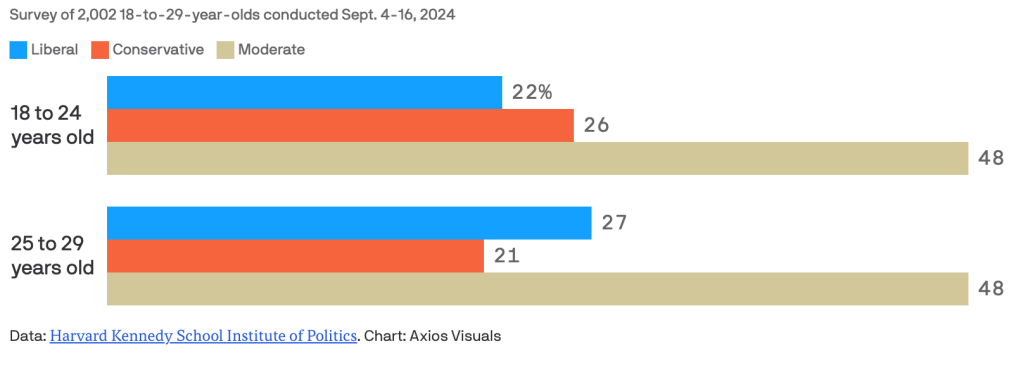
Right wing rhetoric has become increasingly entrenched in Gen Z, who started out as the most liberal generation yet, at least pre-Covid. What emerged as a Y2K frenzy painted in seventies flares, crop tops and cow prints quickly morphed into an obsession with ‘quiet luxury’, the ‘old money’ aesthetic, ‘trad wives’ and the ‘beigification’ of everything (recall the horrific Pretty Little Thing rebrand).
However, online politics have also translated to real life, with America’s youngest voters turning right. While there is still a large disparity between genders, with young women taking far more liberal positions than men, for the first time in a decade, it’s becoming bluntly cool again to be homogeneously white, thin, rich and unempathetic.
This isn’t saying that whiteness and fatphobia haven’t always been embraced as the norm, but the 2010s and early 2020s clearly showed that liberals had their pulse on the culture. While this admittedly gave rise to other problems, including Blackfishing and the appropriation of Blackness, it also meant that ‘wokeness’, activism, feminism and jumping onto Twitter cancelations en masse were all ‘in’.
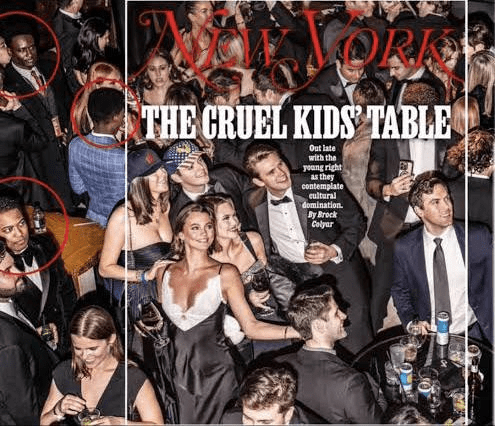
The pendulum always swings and it seems that compassion fatigue was one of the main side effects of rampant cancel culture, with the right welcoming in those who had become excluded due to social faux pas they had been indignantly cancelled for and branded as ‘unforgivable’. This, paired with a looming recession, Biden’s many political failures and the rise of alpha male influencers has reframed the right as edgy and even ‘punk’ (which is inherently an oxymoron, but that’s another article).
When Sabrina’s album cover was released, it showed her kneeling on all fours, next to a suited man messily holding a piece of hair. In the comment section, there were almost no right wing coded replies, and any straight male tweets we could find cheered her on. Those who are strictly conservative didn’t have the loudest voices in critiquing ‘Man’s Best Friend’, and it’s partly because Republicans are distinguishing themselves by embracing ‘hot’ women.
No, the loudest voices came from women who identify as feminist, suggesting that the trickle down effects of purity culture have seeped into even leftist and liberal Gen Z spaces as a coping mechanism of our targeted rights.
Purity culture within second wave feminism
While a lot of 2010s activism was performative, as most people evidently swung the other way when liberalism stopped trending, the contemporary zeitgeist did embrace Fourth-wave feminism at the time. This wave of feminism was characterised by its focus on body positivity, the #MeToo movement, intersectionality, and the (sexual) empowerment of women.
However, the cultural shift, paired with the stripping of women’s rights such as the reversal of Roe vs Wade, has ultimately sent this sex-positive 2010s feminism into the decline. Even progressive women have begun to reevaluate the hook up culture which associated liberation with sexual freedom, embracing celibacy as a way to protect themselves from harm in a world where abortion is being criminalised.
As we reevaluate the messages we were fed in the 2010s, we can coolly observe that the sex positivity sometimes worked in favour of the needs of men themselves, not always to our benefit.
Protests like ‘slut walks’ were also part of the sexual revolution at the time, aiming to highlight victim-blaming, rape culture, street harassment, and sexual violence.
One of the main messages from this time was not to demonise female sexuality and bodies. The question is, has this been entirely forgotten as even leftists begin to adopt a more socially conservative culture?
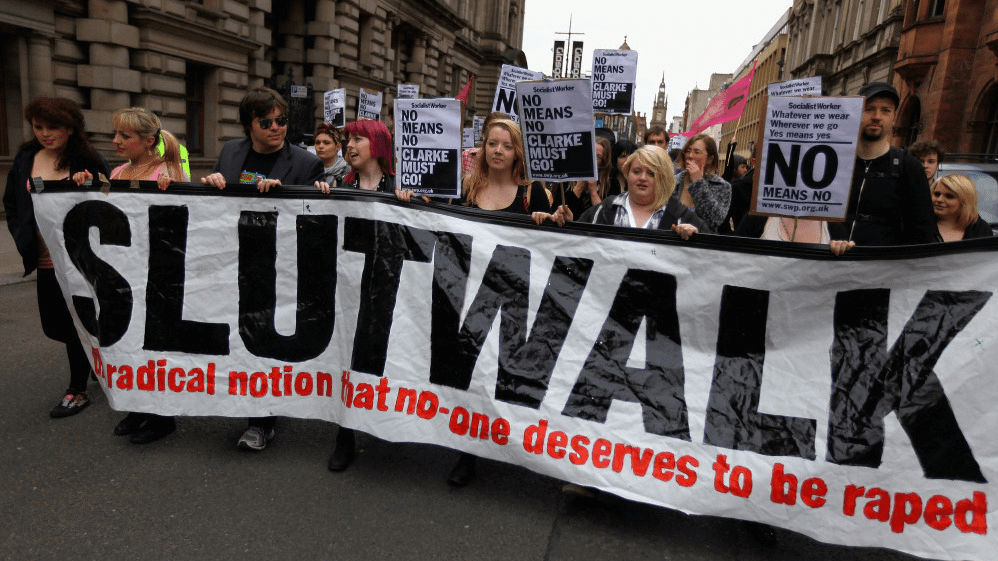
While fourth wave feminism is technically still around, seemingly as a response to the right and its attack on feminism itself, it’s arguably morphing into a borrowed version of its grandmother, second wave feminism, as a response to the conservative climate of the 2020s.
Second-wave feminism, active from the 1960s to the mid-1980s, heavily critiqued the objectification of women, viewing it as a core aspect of sexism and a barrier to gender equality. Feminists argued that the sexual objectification of women, particularly through pornography, perpetuated harmful power dynamics and contributed to their oppression.
While some second-wave feminists viewed prostitution as a form of male violence and exploitation, others, often labeled as “sex-positive” feminists, argued for recognising women’s agency and choice within sex work. This led to significant internal debates and conflicts within the feminist movement, known as the “sex wars”.
A recent TikTok trend, “propaganda I’m not falling for”, included women stating that they’re not falling for “sex work as empowering”.
Many of the same demographic of feminist women branded Sabrina’s cover as “self objectification”, “degrading” and “oversexualisation”. When the cover dropped, everyone collectively ignored the sexually free pop predecessors she is borrowing from, including Madonna’s Sex coffee table book, Britney’s “i’m a slave for u”, Christina Aguillera’s “dirrty” and Miley’s “Wrecking Ball” era.
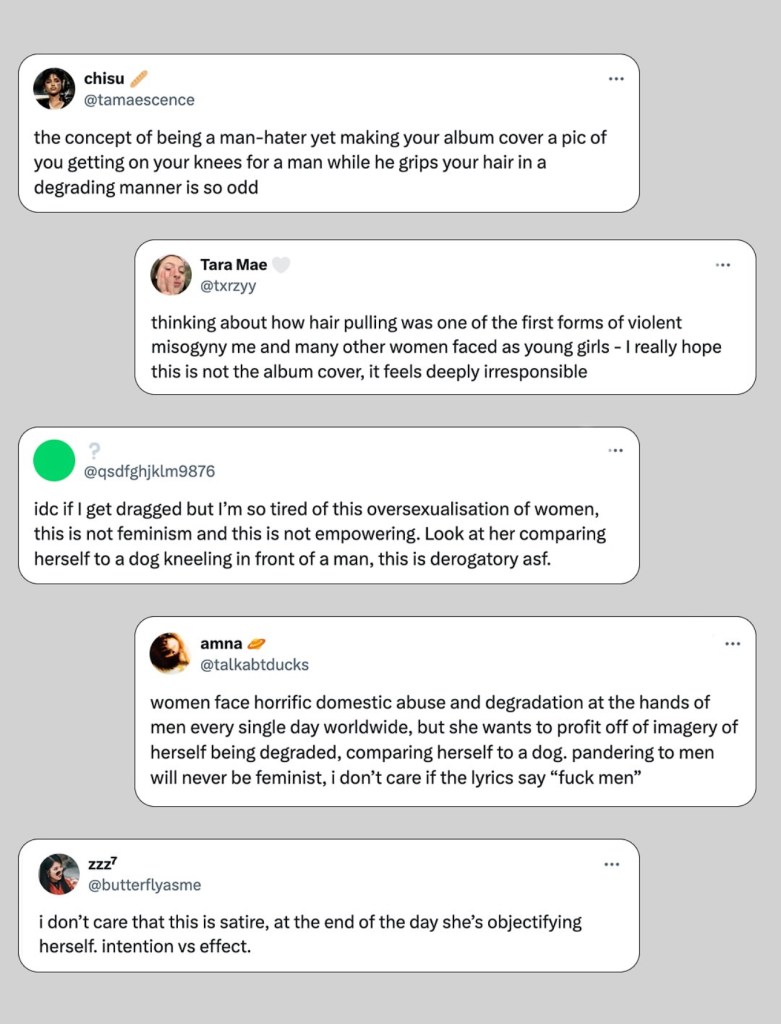
From other online discourse, including that of Sabrina’s cover, we can infer that, in the rejection of choice feminism, which labels everything a woman chooses as a feminist act (including plastic surgery), feminist discourse has swung so far to the supposed left, the rejection of pandering to male desires in an increasingly homogenous world, that they willingly demonise consensual female sexuality as a symbol of ‘the male gaze’.
Is Sabrina a symbol of the male gaze theory and self objectification?
Laura Mulvey was a prominent figure of second wave feminism and her ‘Male Gaze Theory’ (1975) argues that films often encourage the viewer to adopt the perspective of the heterosexual male gaze onto the representations of the screen. A film’s aesthetic features create a construct where any spectator, even a woman, is encouraged to take up an objectifying attitude to other representations of women.
Male fantasies, male fantasies, is everything run by male fantasies? Up on a pedestal or down on your knees, it’s all a male fantasy: that you’re strong enough to take what they dish out, or else too weak to do anything about it. Even pretending you aren’t catering to male fantasies is a male fantasy: pretending you’re unseen, pretending you have a life of your own, that you can wash your feet and comb your hair unconscious of the ever-present watcher peering through the keyhole, peering through the keyhole in your own head, if nowhere else. You are a woman with a man inside watching a woman. You are your own voyeur.
Margaret Atwood, The Robber Bride
In 2023 and 2024, one of the biggest trends on TikTok was dressing for the male gaze vs dressing for the female gaze. As always, it is impossible for the internet not to simplify a term as complex and philosophical as the male gaze theory.
Women were using ‘the female gaze’, a very rich theory, to refer to the current fashion trend, which is less body conscious and more based on ‘Ganni’ style extravagant tops, which also play into the ‘old money’ and quiet luxury aesthetics’, contrasting with the loud Y2K style of the 2020s. In contrast, the ‘male gaze’ referred to figure hugging pieces, which was the 2020s Y2K trend. When the trends change back, it’s pretty safe to say that most of those women will follow them again.
The main issue here is the complete misunderstanding of what the ‘male gaze’ actually is, and its overt simplification. Firstly, Mulvey uses the term to refer to the depiction of women, usually in male-led media productions. Therefore, Sabrina’s cover wouldn’t directly apply to this as it was ultimately her creative choice to pose in this way, to make a statement that we can only assess once we hear the album (again, not a defender of choice feminism, but it’s an important distinction).
Secondly, Atwood’s quote uses this theory to comment on aesthetic self objectification, and ultimately suggests that the male gaze has become so embedded into Western society that it is a collective, rather than individual, problem (“even pretending you aren’t catering to male fantasies is a male fantasy”).
Almost every heterosexual woman has internalised patriarchal beauty standards, whether they pose sexually or not. Going back to the trend, it’s impossible to truly “reject the male gaze” if you’re wearing a traditionally feminine, but looser dress, but labelling it as “the female gaze”.
By vehemently disowning Sabrina as the feminist you thought she was, you are placing yourself on a ‘holier than thou’ pedestal above her when, in actuality, even the act of wearing makeup can be slammed as anti-feminist by someone who presents as more ‘butch’ than you do (“up on a pedestal or down on your knees, it’s all a male fantasy…”).
Simultaneously, modest dressing and the term ‘vulgar’ became SEO buzzwords on TikTok, which hearkens back to the slut shaming of the early 2000s. This time, however, liberal women online who still embraced feminism were labelling sexually promiscuous and provocative women, not as sluts, but as failed feminists, who were “setting feminism back fifty years” and “objectifying themselves for the male gaze”.
One of the radical feminists of second wave feminism was Julie Bindel, who campaigned against male violence, sex work, and trans rights, on the grounds that the former objectified and oppressed women for the pleasure of men.
In 2018, Bindel argued that “the left has forgotten what feminism looks like”. In this highly transphobic article, she condemns both conservative modesty, as well as the sexually empowering ‘slut walks’ she believes cater to men who “would rather cheer on the idea of a woman walking around in a basque rather than dungarees”.
In a sense, this is true for Sabrina’s cover, as men do cheer her on and would prefer this form of ‘feminine expression’ to a less heterosexually appealing artist, such as Chappell Roan.
However, the issue is that aligning with Bindel’s type of anti-trans, anti-sex work feminism is ultimately anti-intersectional, as it excludes different types of women who stray away from being ‘the perfect feminist’.
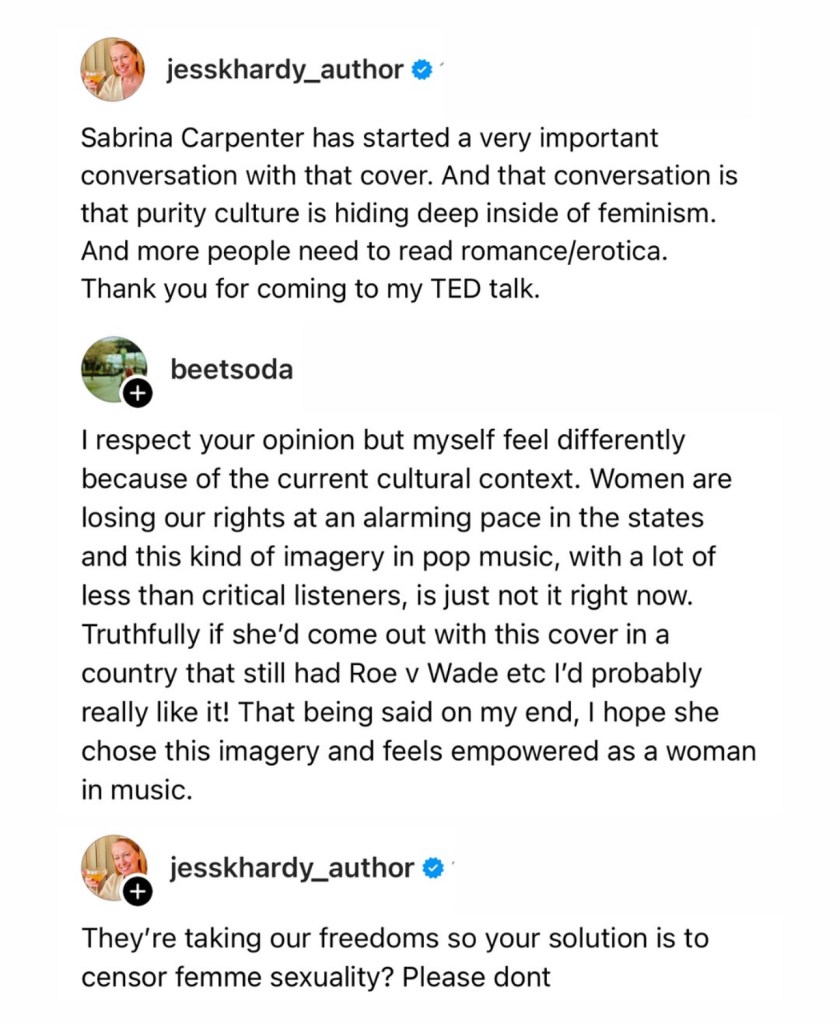
As Jess Hardy puts it, purity culture is hiding deep inside of feminism and women are using it as a guise to then slut shame and censor women, instead of putting their blame onto the policy makers who are making it difficult for us to express ourselves. Within the movement, it’s turning into a race of superior feminism, and using femme presenting, heterosexually appealing women as a scapegoat for the current war on women the US administration is vehemently backing.
Gen Z are also having less sex than prior generations and their obsession with productivity and becoming ‘high value’ individuals has arguably separated them from complex expressions of artistic sensuality. Ironically and accidentally, ultimately well intentioned women are taking their frustrations out on the wrong people – the men who are stripping us of our rights.
The treatment of women like Sydney Sweeney and Sabrina shows how far we have strayed from the anti-victim blaming agenda of the 2010s, grouping women into an updated dichotomy of the Madonna/Whore complex; online feminists see either a traitorous celebrity living to please men and renounce feminism, or a “girls girl” dressed in a modestly cut Peter Pan collared blouse with ‘clean girl’ makeup.
In defence of the outrage
Admittedly, the only reason Sabrina’s defence weakens against critics is that it’s not her sexuality which is on trial, but the signified connotation in the picture.
Ronald Barthes’ Semiology Theory argues that signs consist of a signifier (a word, an image, a sound, and so on) and its meaning – the signified. The signifier is the object, whilst the signified is what it represents metaphorically.
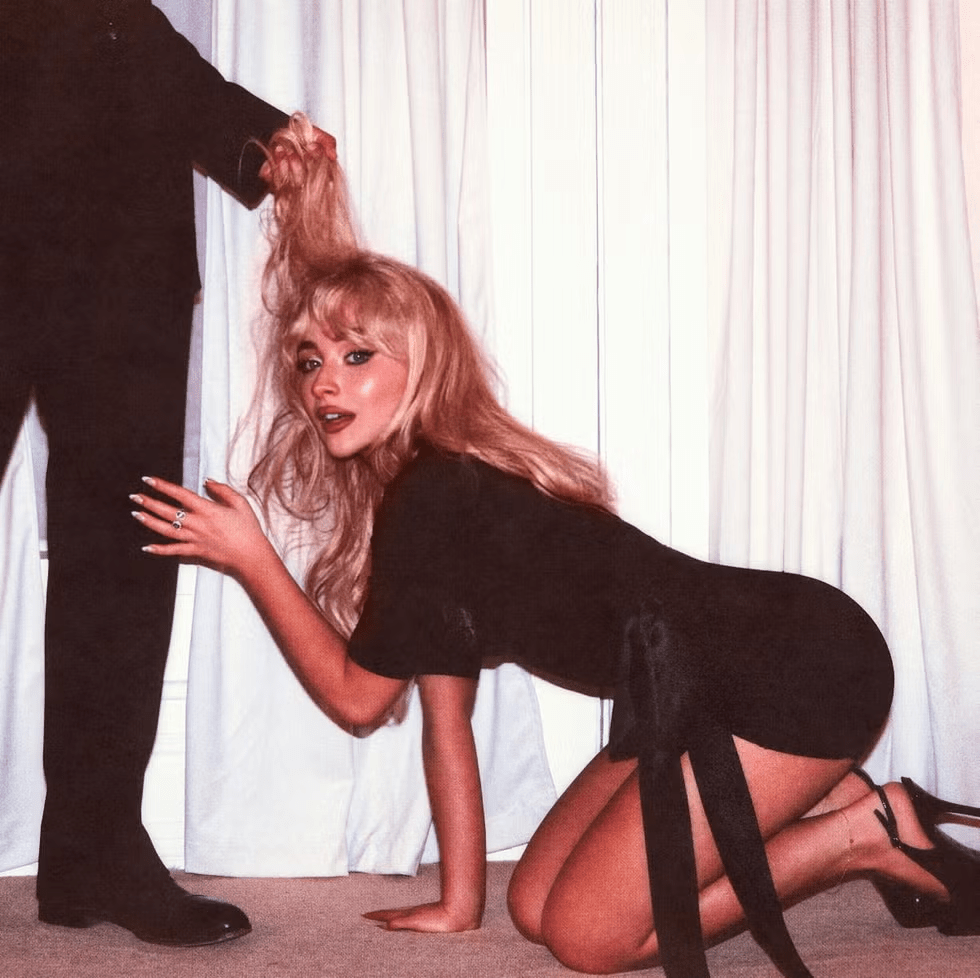
In the case of Sabrina’s cover, the issue isn’t specifically that she’s engaging in a sex act or that she’s undressed. Rather, the signified content in the image is that a blonde, petite, made-up woman is kneeling below a person (most likely a man), his face out of frame. His hand is clenched in a fist, holding a messy tuft of her hair. She’s wearing a short, black dress, her hand lifted towards the fully clothed man’s thigh, looking at the camera playfully.
The signifier of this image is that the woman is completely submissive, which is exacerbated because his suit denotes a position of power, while her short dress highlights her pandering , and suggests she is purposefully self objectifying for both her pleasure and his.
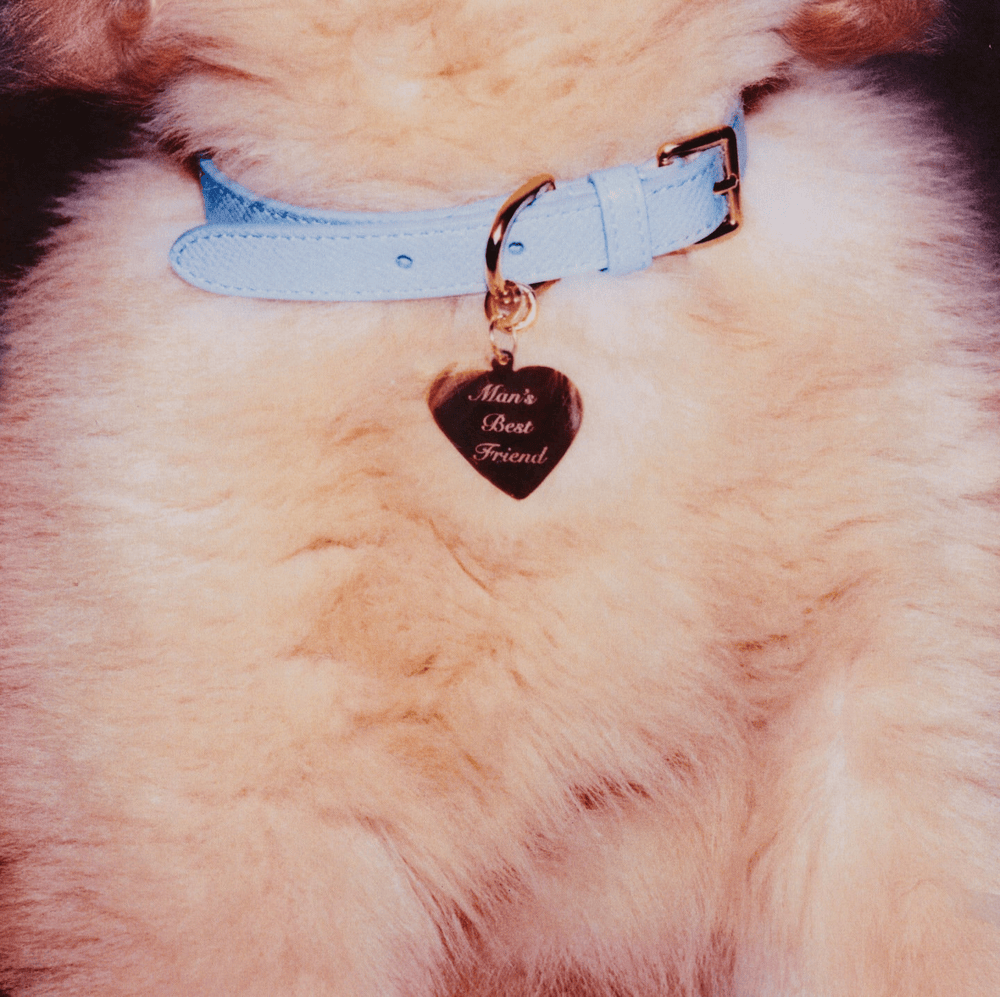
The second cover art shows half of a furry animal (presumably a dog, but it could also be a cat) with a heart shaped collar that says “man’s best friend”,
From this image, the important thing is that it further emphasises her role as a “dog” in this scenario. Dogs are typically both loyal and dependent on their (stereotypically male) owners, which suggests she is also under the man’s control.
Of course, the album itself could ironically juxtapose this image’s subtext, however, as another social media user pointed out, her work isn’t radical enough to justify a cover that is very clearly submissive, in an era where some men online claim they “own” women.
Conclusion
It’s not as simple as supporting Sabrina completely or believing that her actions are radical, smart or feminist just because she sings about usurping men. Not everything a woman does needs to be be an inherently feminist act, and that’s okay. She may be establishing herself as the queen of satire, but this clearly hasn’t hit the mark yet, unless she does something really interesting with the album and the remaining visuals.
At the same time, Sabrina is definitely not the first pop star to be sexually suggestive, even in a kink or submissive way (recall Lana’s ‘question for the culture’ back in 2020).
While the problem with the cover is more that she’s playing into the dog/owner imagery than her sexual appeal, it’s clear that the shifting zeitgeist and increasingly anti-intersectional feminism have embedded a strangely counterproductive purity culture in a generation initially defined by their diversity and progressiveness.
If your issue with the picture lies in its portrayal of a certain type of femme sexuality, then you clearly have a lot to learn. The public trial of Sabrina seems to forget the lessons we learned from fourth wave feminism and the #MeToo movement, which people forget are still relevant today (even if there are more prevalent issues to fix). This is that sexy women and sex workers aren’t the perpetrators, they’re the byproduct, of patriarchy and they don’t owe you a damn thing.


 My Goddess Complex
Leave a reply to Yeah Nah Cancel reply