Since moving to London almost five years ago now, I’ve loved exploring the local boroughs. Having just moved house at the start of the new year, I thought to explore galleries I haven’t before which brought me to the William Morris Gallery in Walthamstow.
You might have also heard of William Morris from the Victoria & Albert Museum – which is one of, if not my favourite, art gallery and museum in London. The gallery shop for the V&A holds textiles and designs on products that are created by Morris, in this floral patterned note that is easily recognisable. I’ve also been gifted a cushion pillow case from the V&A with a Morris design that’s vibrant yellow with leafy and flower designs on top. When you walk into the Morris gallery and house you’re presented by the gift shop that’s reminiscent of the V&A shop in South Kensington – then the exhibition starts to the right.
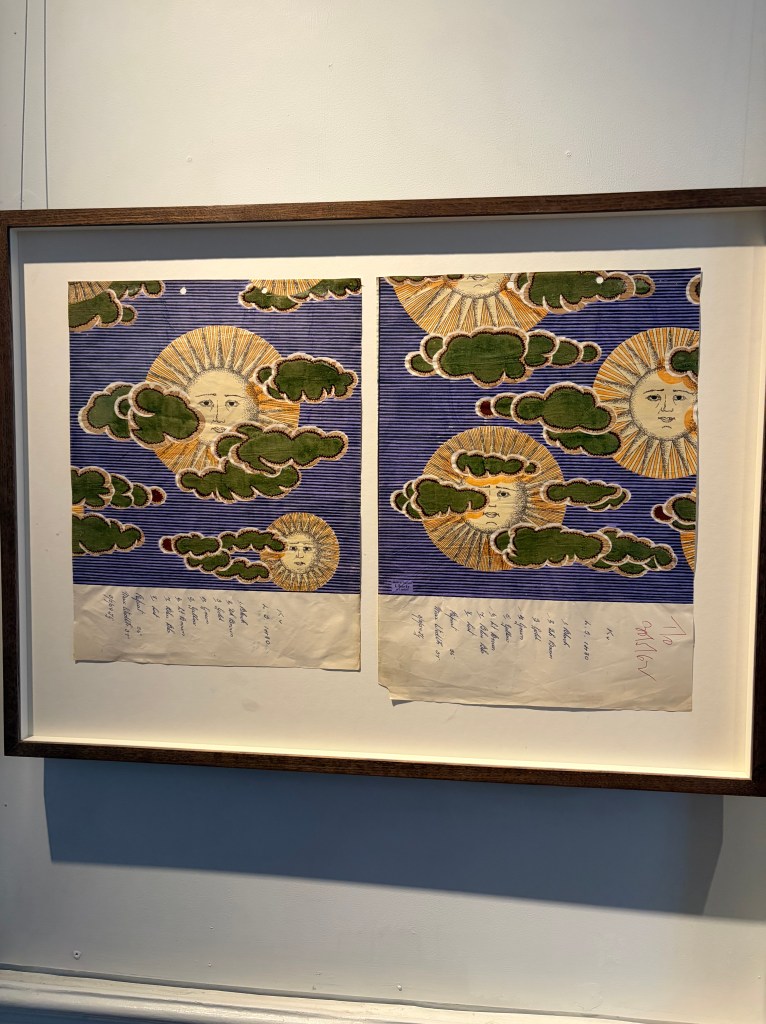
‘Women in Print: 150 Years of Liberty Textiles’ is showing until Sunday 21 June 2026 and is free to view. When you enter the gallery in the park, on first approach you would assume it’s a smaller art gallery such as the likes buried within Hyde Park, when in actuality, it’s a bigger gallery inside a large Victorian house with a blue plaque outside as Morris is from Walthamstow.
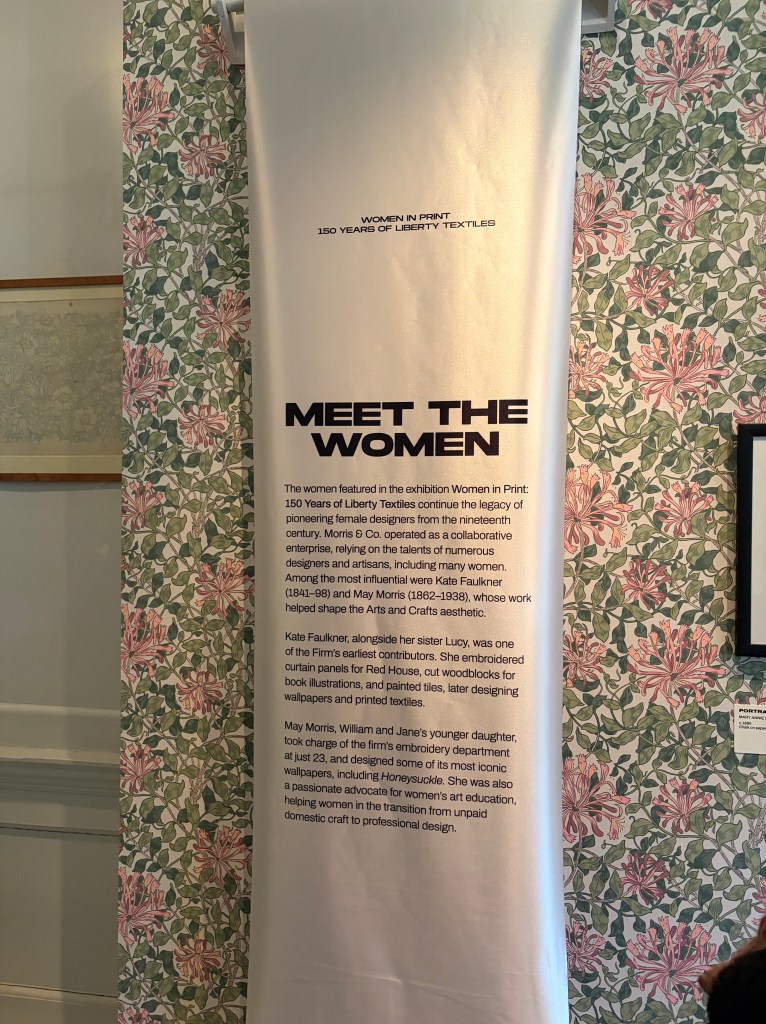
“The women featured in the exhibition Women in Print: 150 Years of Liberty Textiles continue the legacy of pioneering female designers from the nineteenth century.
“Morris & Co. operated as a collaborative enterprise, relying on the talents of numerous designers and artisans, including many women. Among the most influential were Kate Faulkner (1841-98) and May Morris (1862-1938), whose work helped shape the Arts and Crafts aesthetic. Kate Faulkner, alongside her sister Lucy, was one of the Firm’s earliest contributors. She embroidered curtain panels for Red House, cut woodblocks for book illustrations, and painted tiles, later designing wallpapers and printed textiles.
“May Morris, William and Jane’s younger daughter, took charge of the firm’s embroidery department at just 23, and designed some of its most iconic wallpapers, including Honeysuckle. She was also a passionate advocate for women’s art education, helping women in the transition from unpaid domestic craft to professional design.”
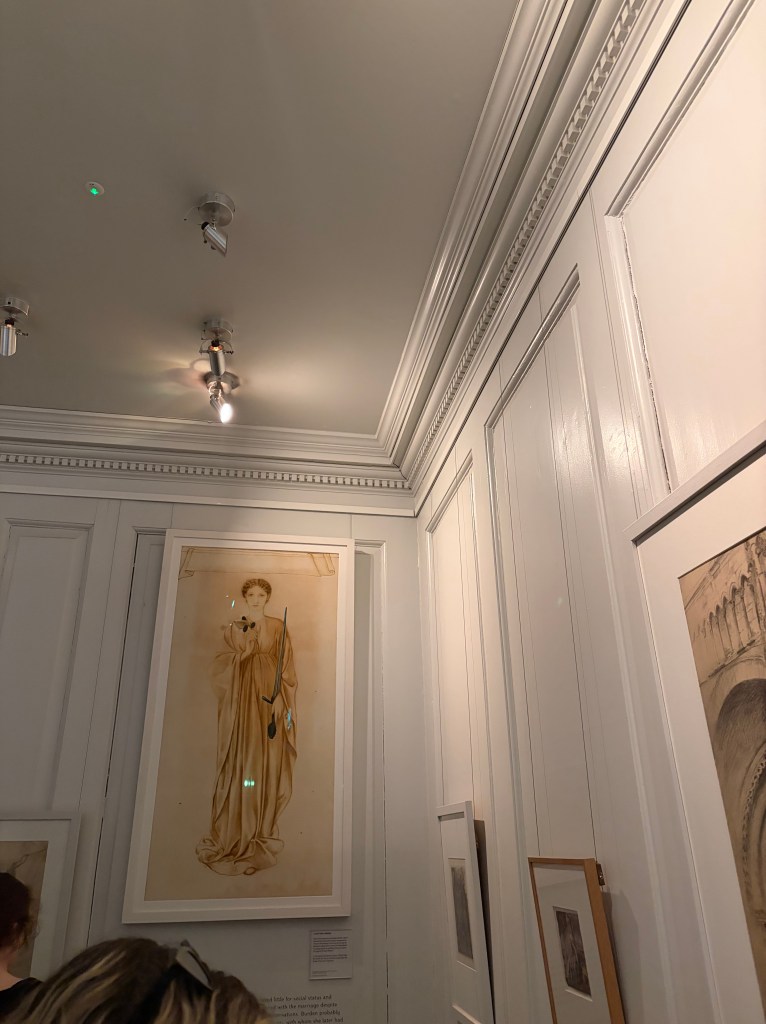
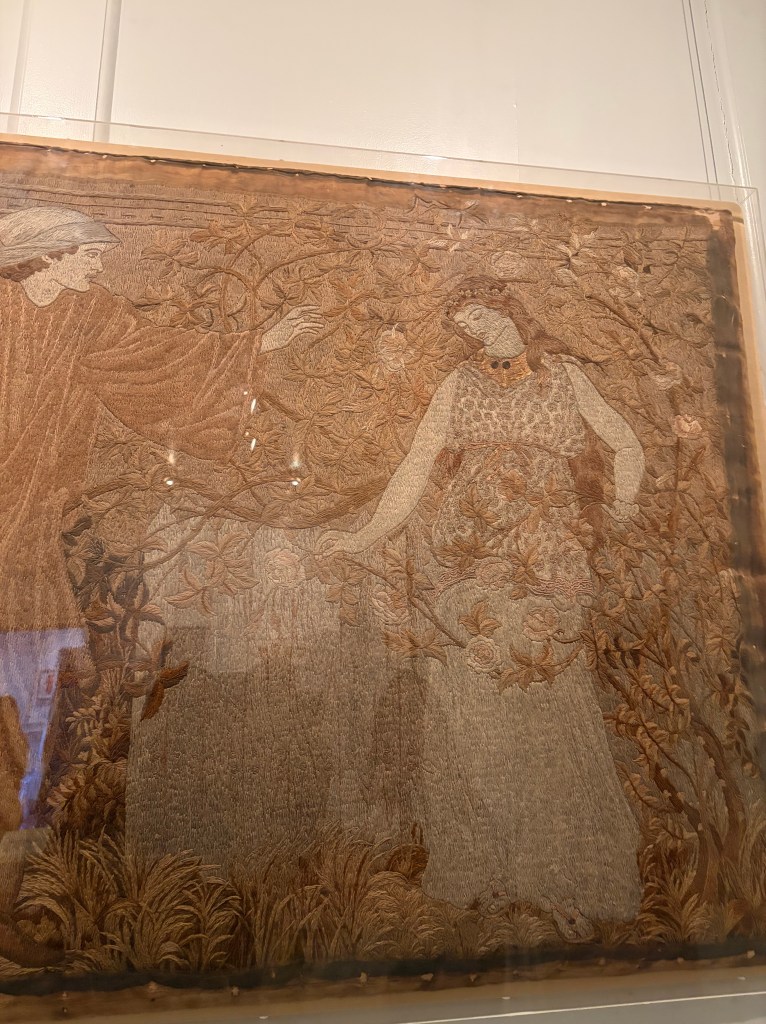
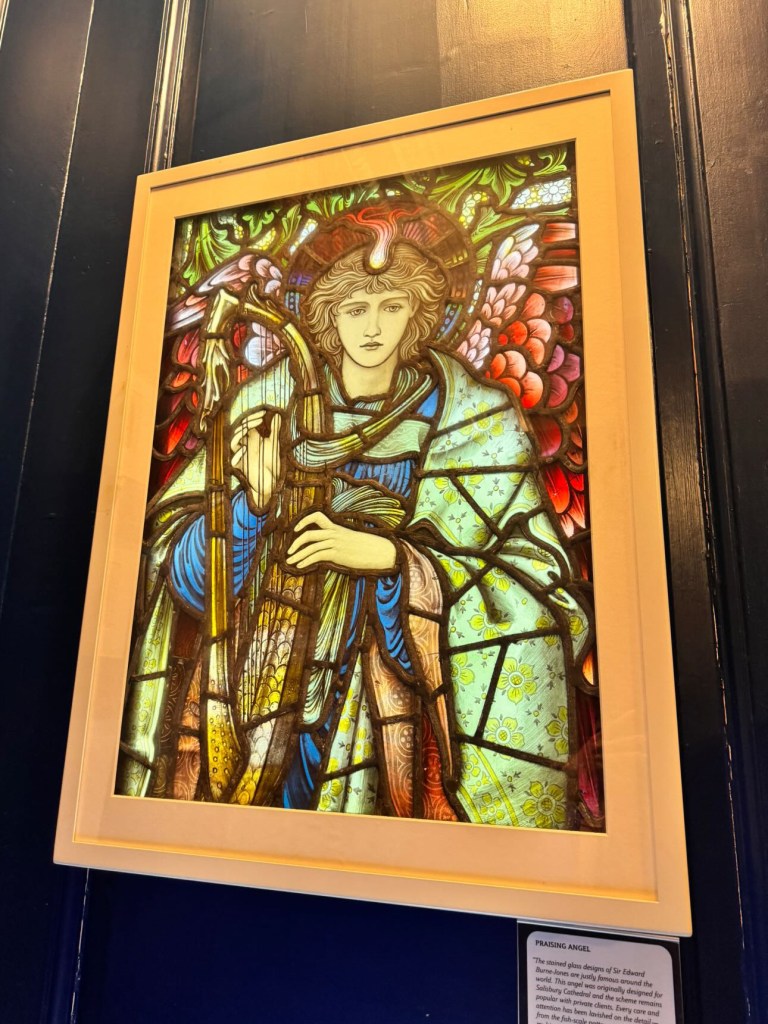
The paintings and drawings etched around the galley show fairy-inspired, Greek and Roman Goddess-like tropes with long dresses, togas, with their hair in plaits tied up to the back. One frame showed a woman holding a sword, which she would then use on herself.
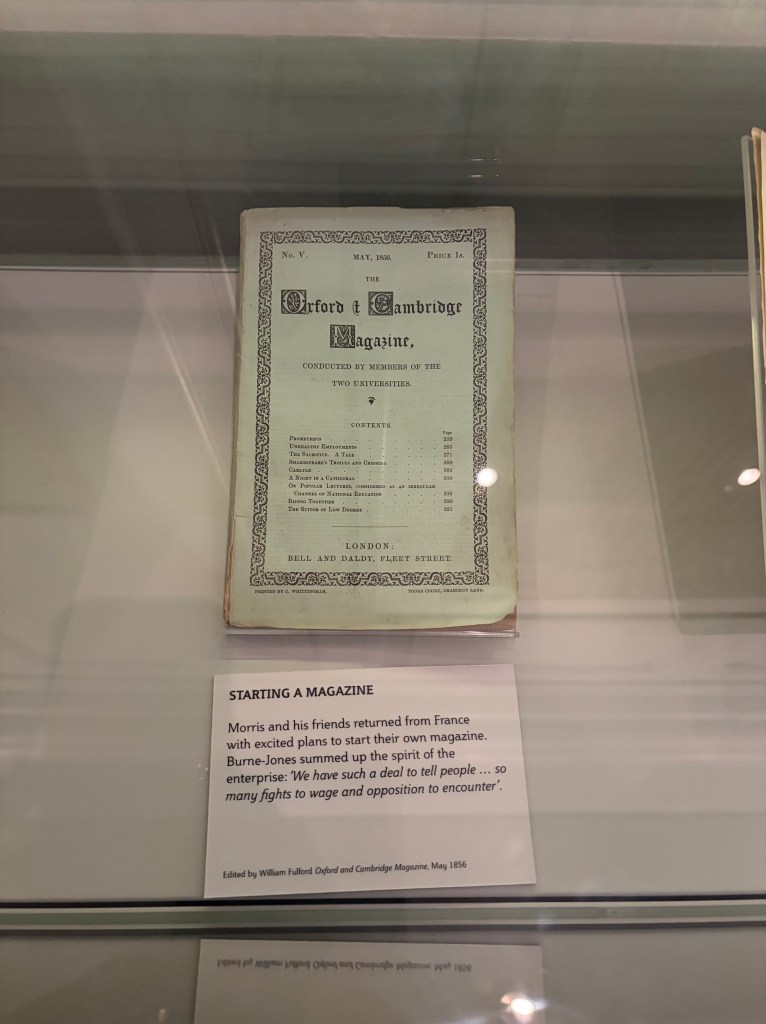
Another picture shows an Oxford and Cambridge paper magazine, labelled with how Morris and his friends returned from France, excited to start their own magazine. This reminds me of our own platform here and how it’s grown and continued on our similar dreams to start a magazine, which we fashioned with zines in print and online.
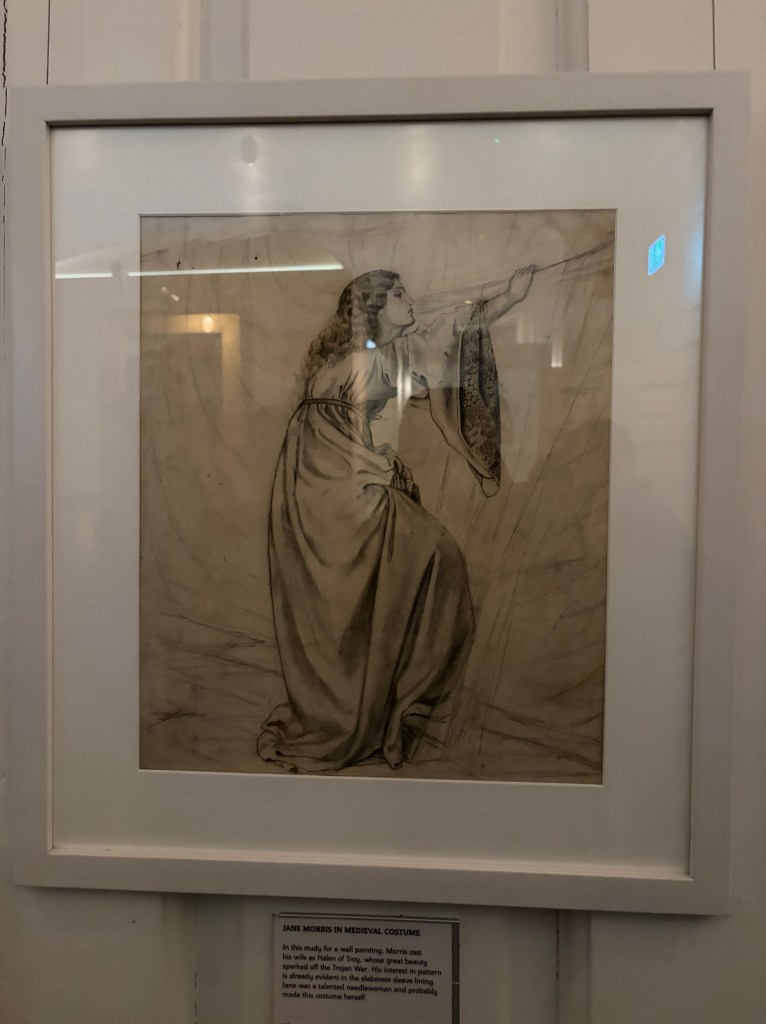
Jane Morris is pictured with medieval costumes around the gallery and medieval wear is coming back in current fashion.
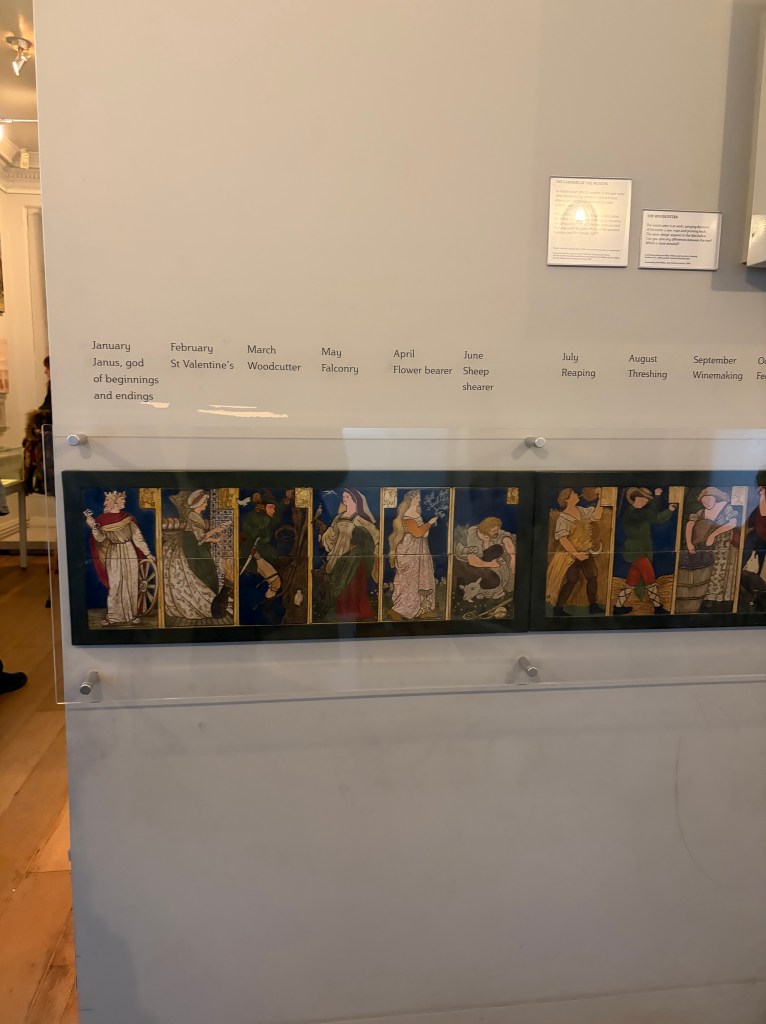
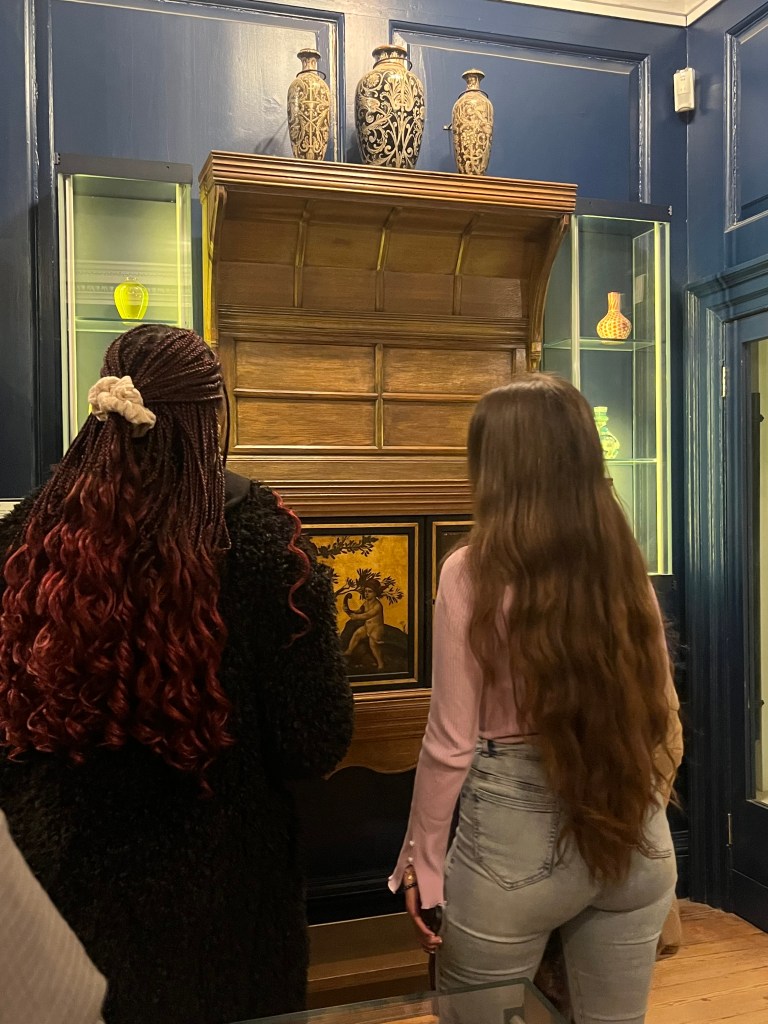
There’s a timeline for the year with January showing the God of beginning and endings, February with St. Valentine’s and September as wine-making. There’s vases with elaborate prints, furniture with stunning paintings, and materials with varying textures show people in a Romantic lense.
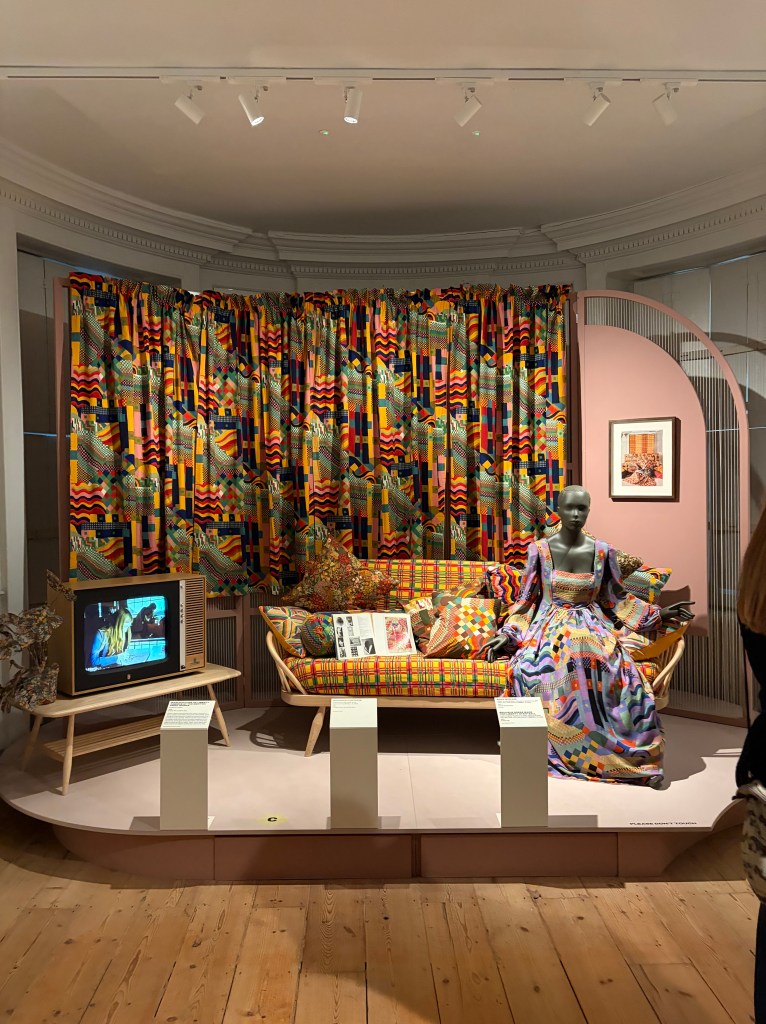
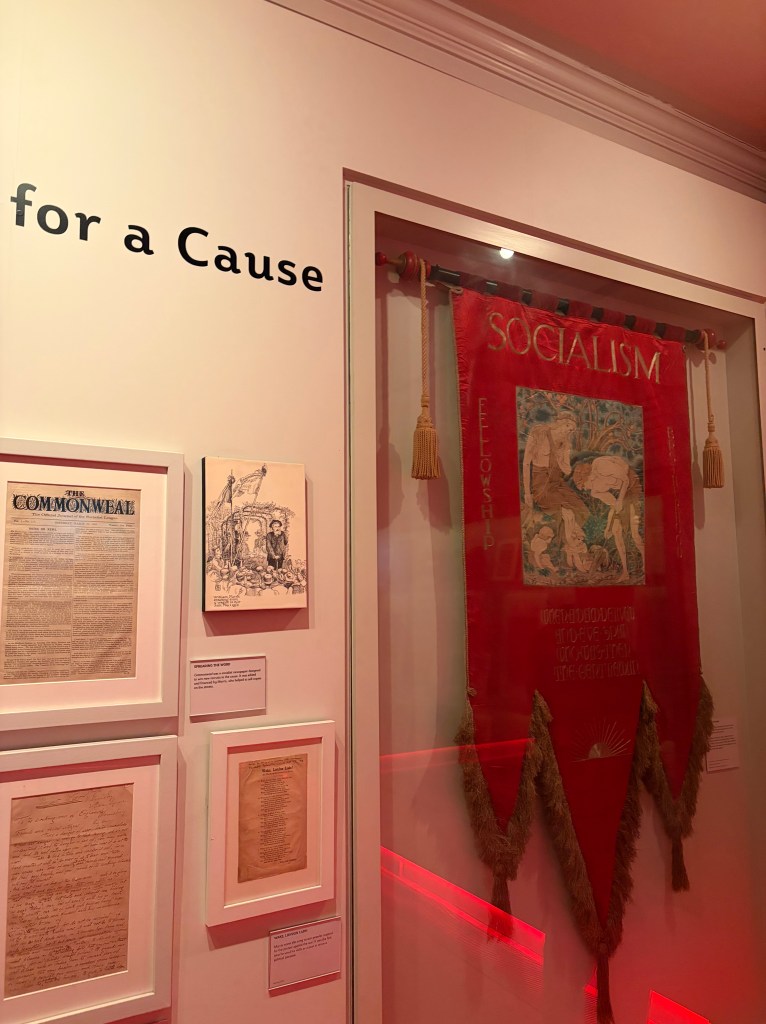
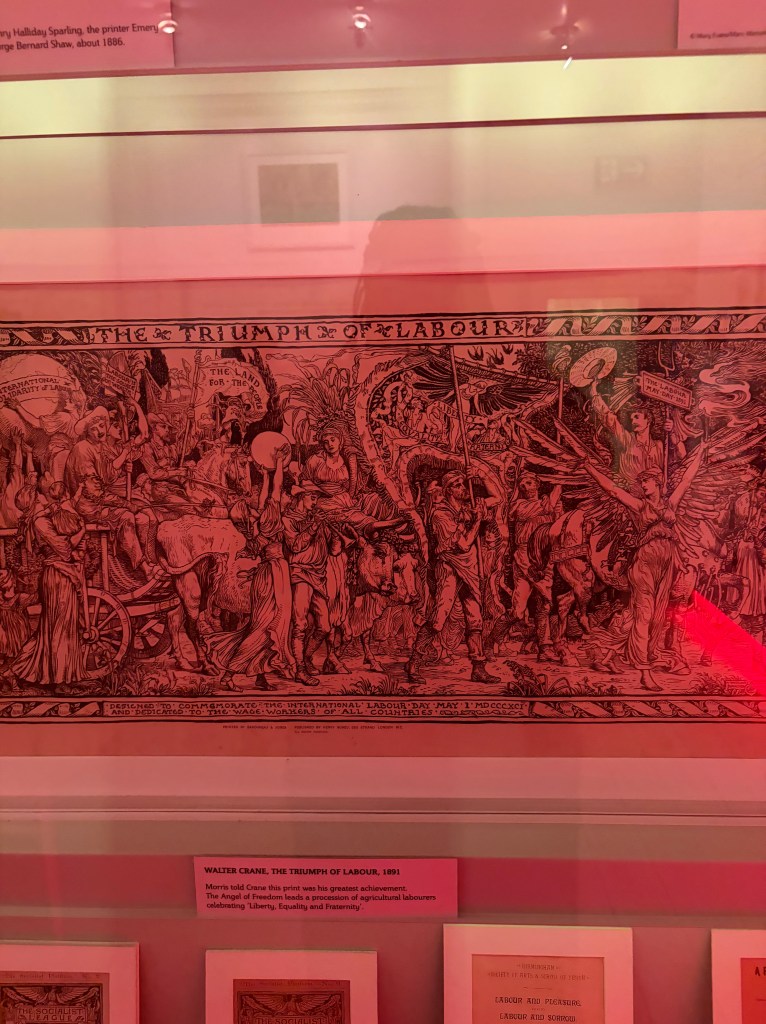
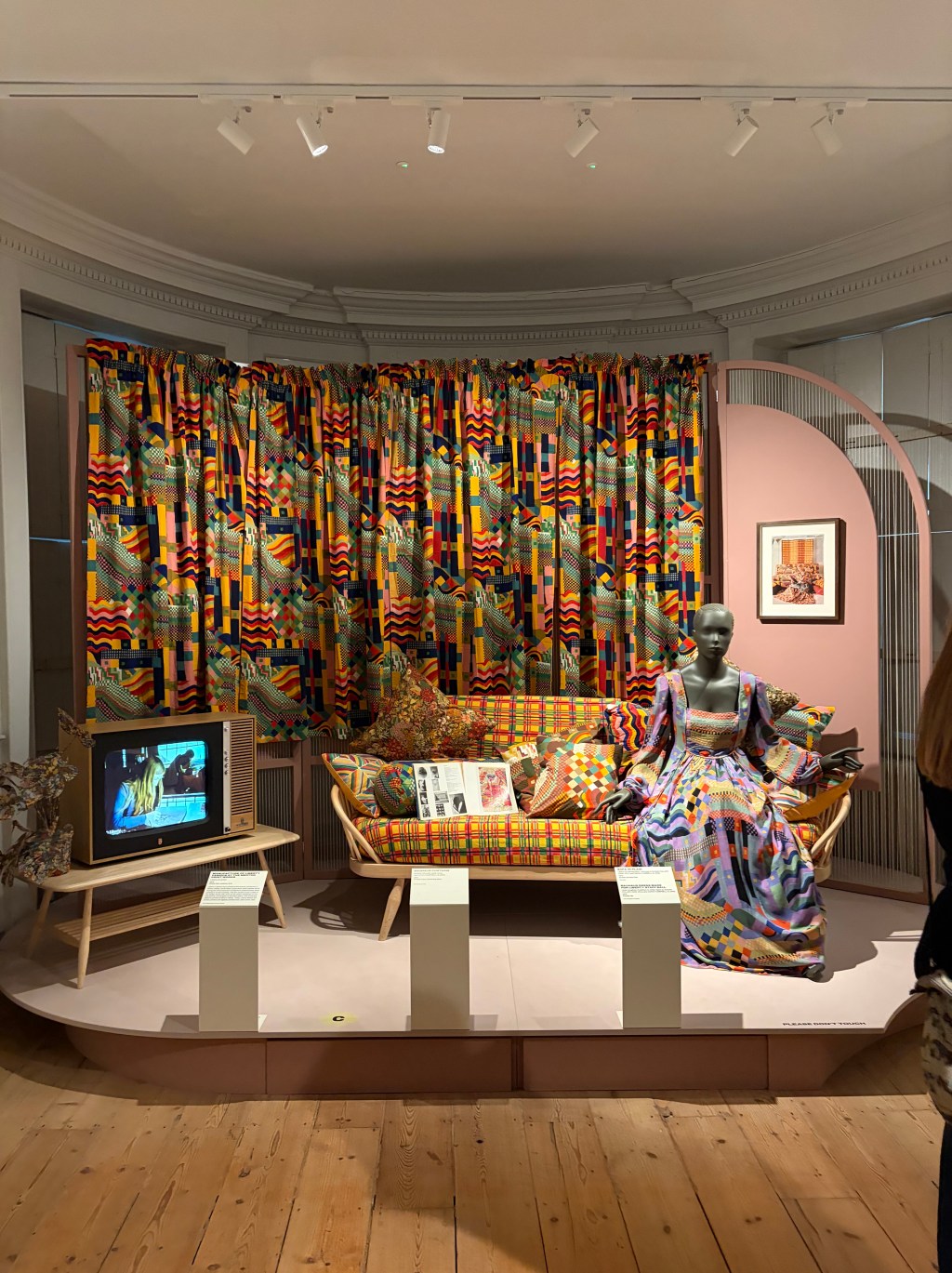
An exhibition upstairs shows louder patterned designs with a sofa, curtains and a dress that appears multi-cultural alongside a TV that displays the textiles being made. Across from this, another exhibition has a red-hue light and holds a red flag for Socialism next to where it states ‘for a cause’. There’s also a projector showing Morris and friends like a mini documentary displayed onto the wall, where you can sit and admire. In the middle of these contrasting exhibitions, there’s a fort (made from Morris inspired designs) where children can play and draw in the back.
There’s also build your own glass stained windows with stencils, and you can trace them in another station, then you can look through magnifying glasses to look at the front and back to compare textures on one textile. My favourite part were the life-size, antiquated books that show drawings like the other frames from the pre-Raphaelite era with Dante Gabriel Rossetti mentioned with the artists being a source of inspiration. It encapsulated everything that we love with the overlap to the Romantic period and our own inspirations for this platform.

 My Goddess Complex
Leave a comment