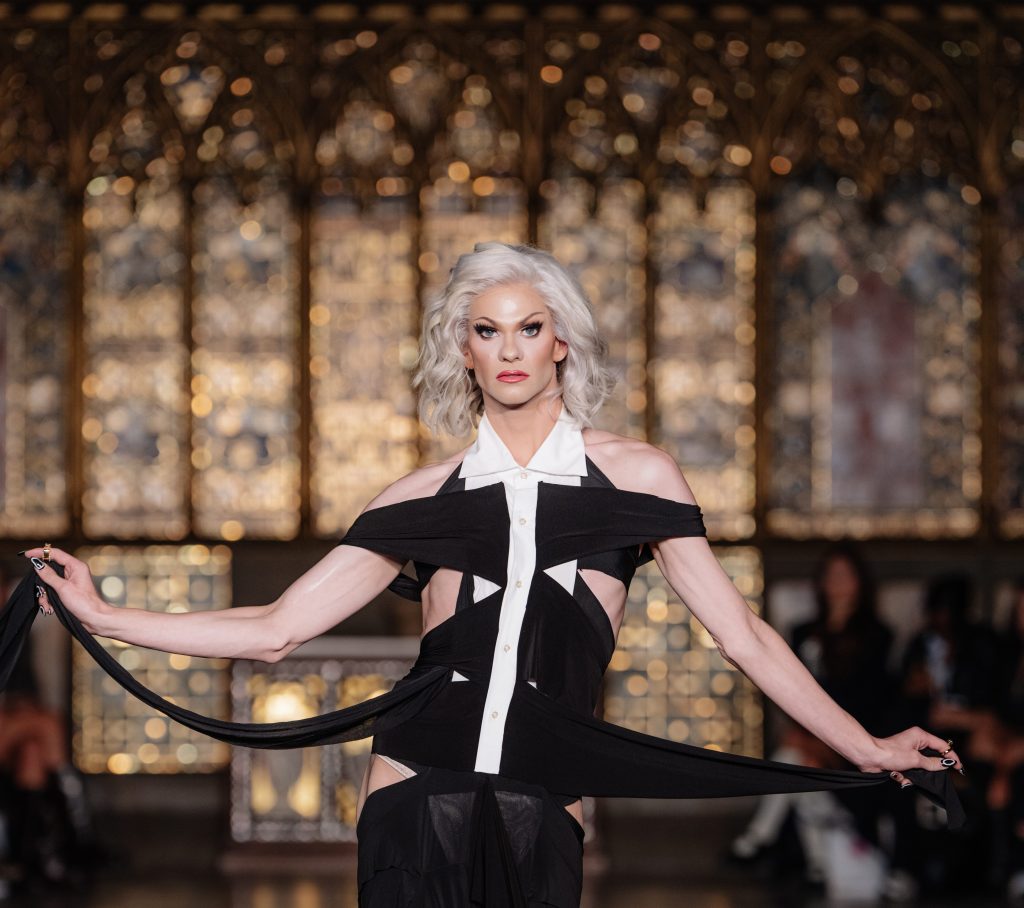
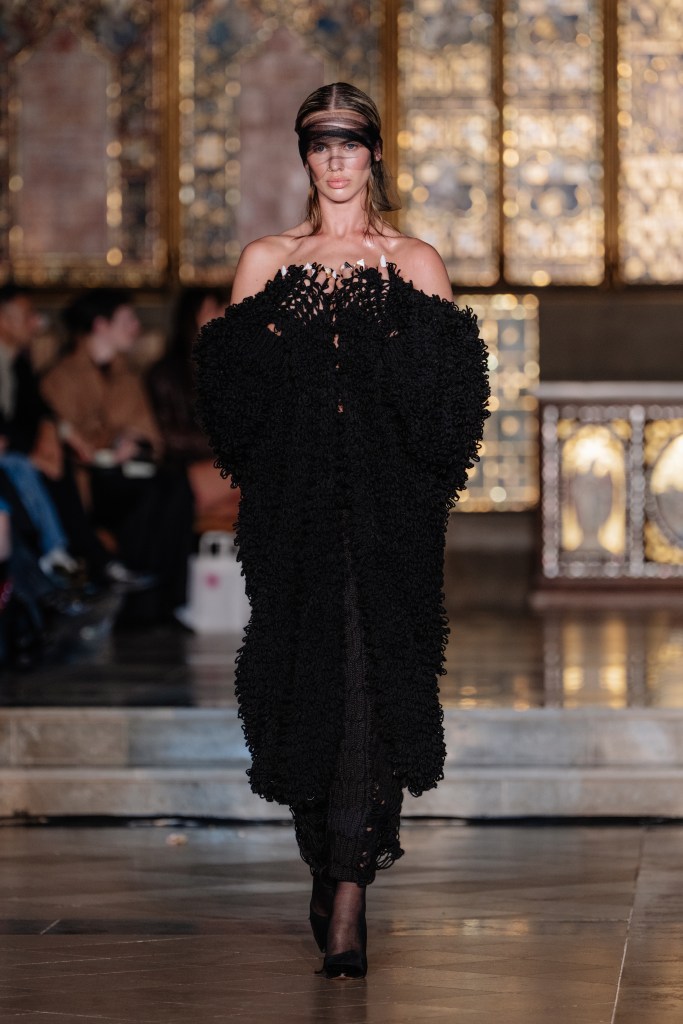
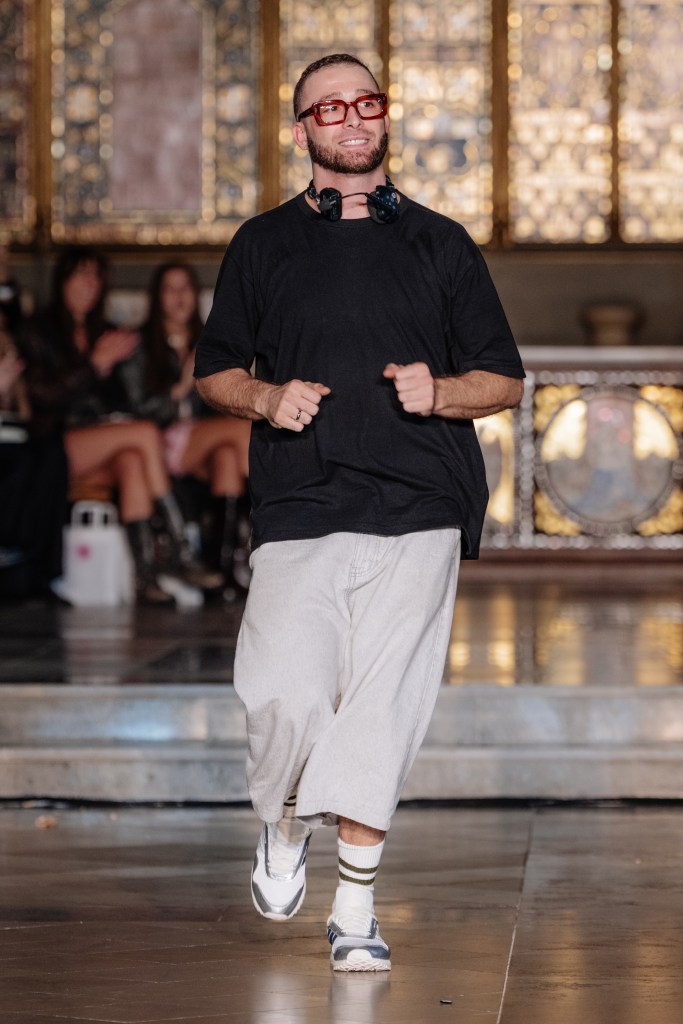
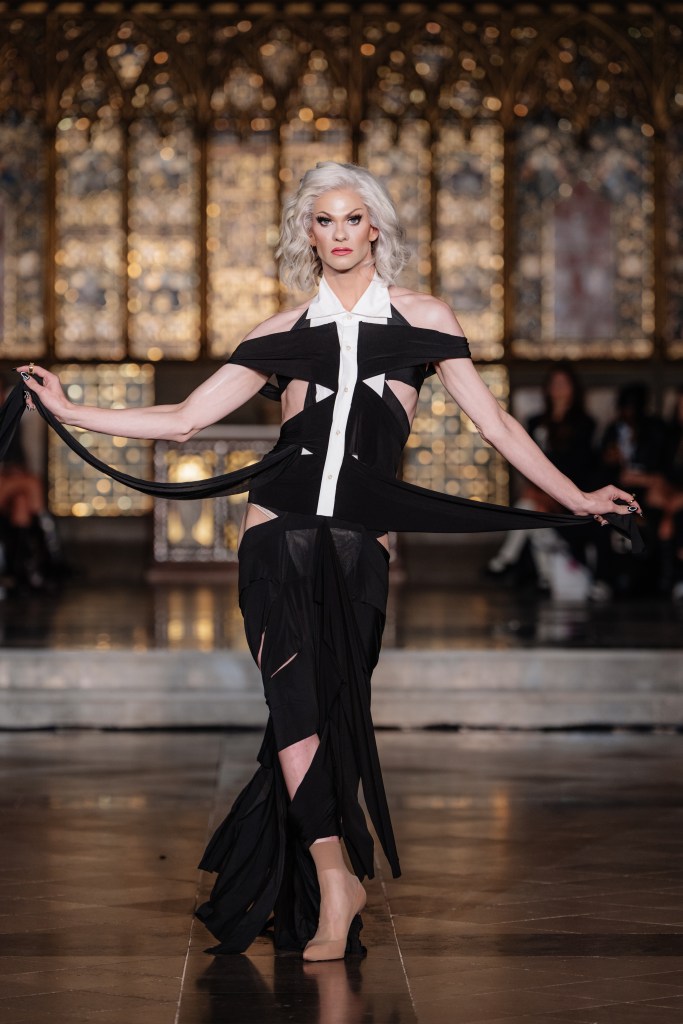
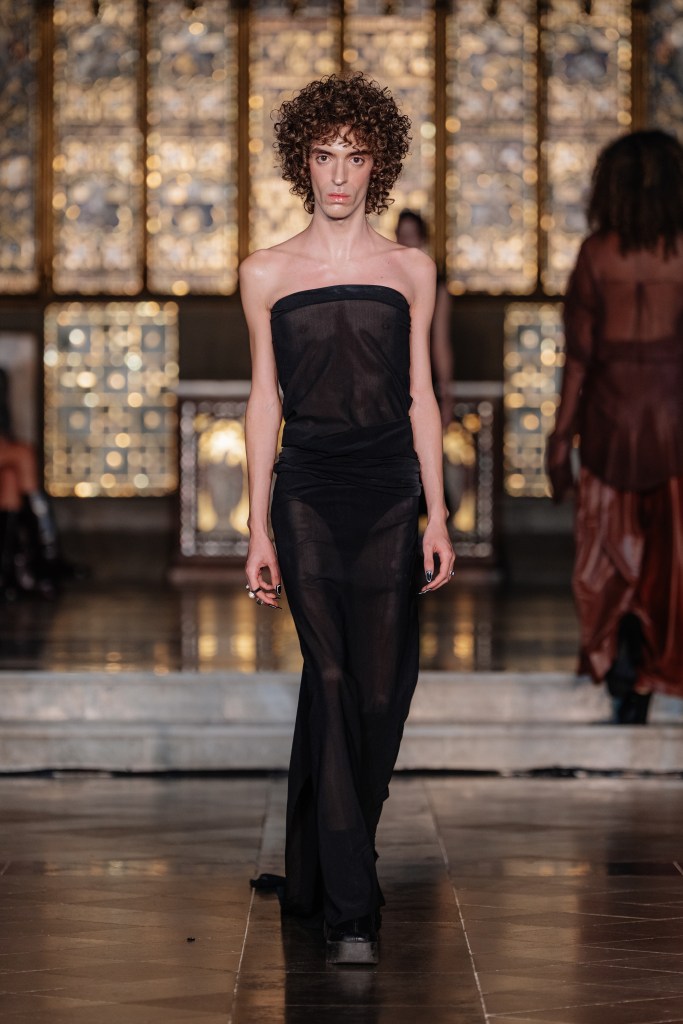
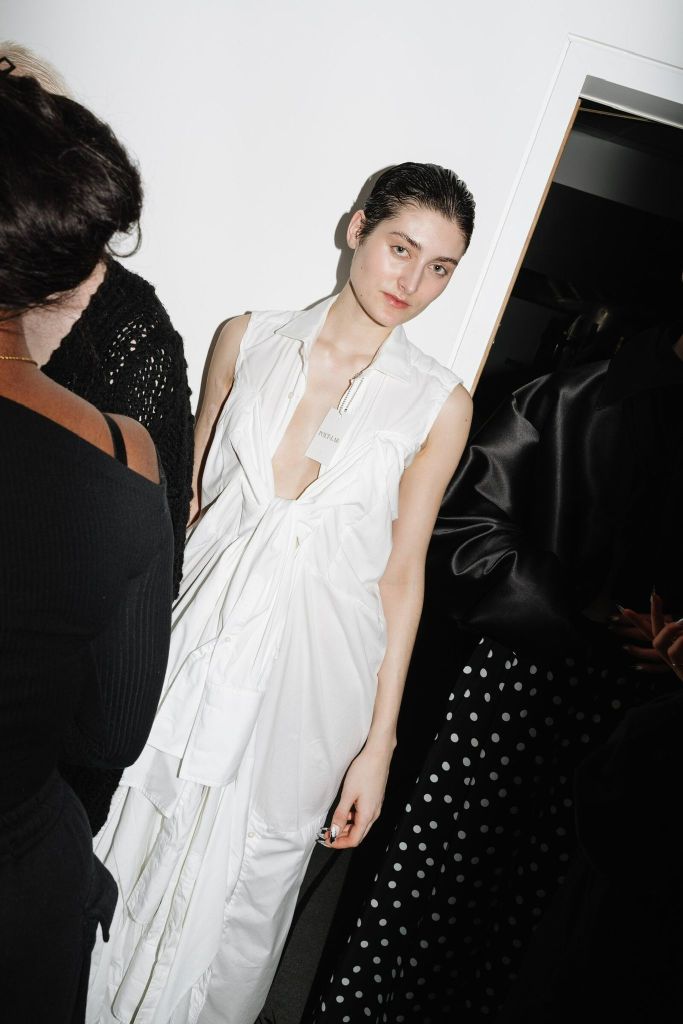
At London Fashion Week, Poet-Lab unveiled “Resistant When Opposites Break” — a visceral declaration of freedom disguised as a fashion collection. Designed by Giuseppe Iaciofano, the London-based label continues to redefine genderless luxury through raw materiality, poetic minimalism, and conceptual edge.
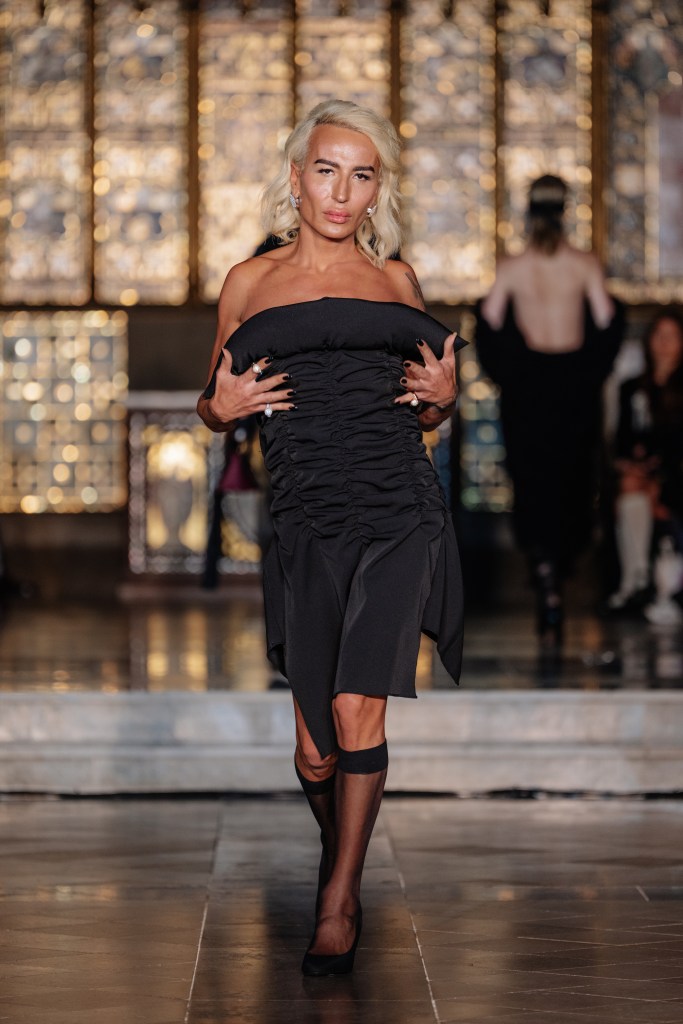
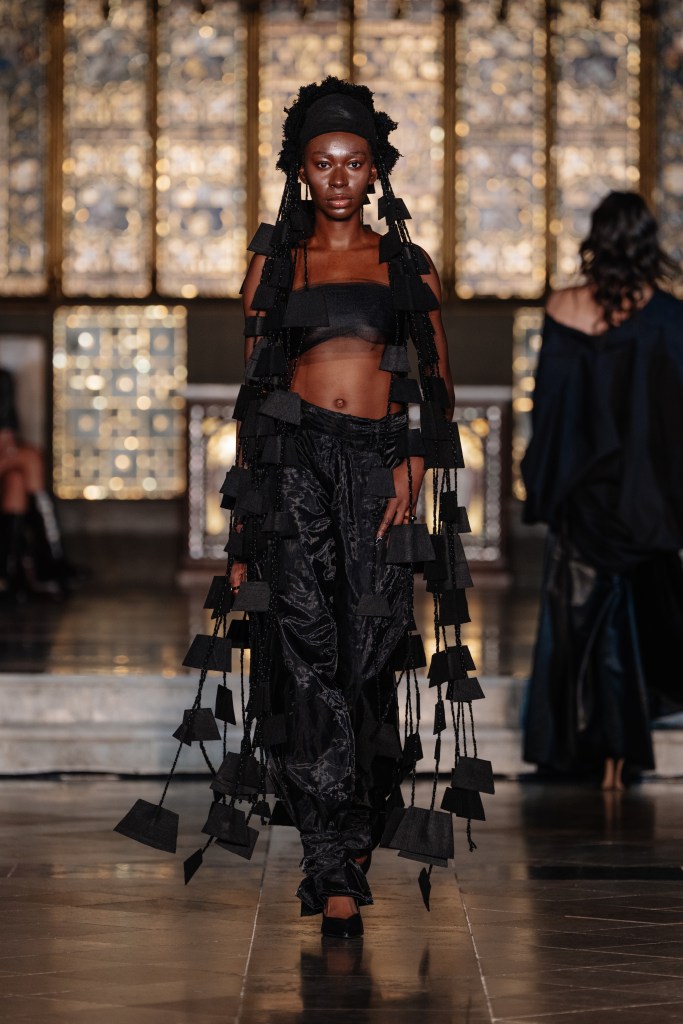
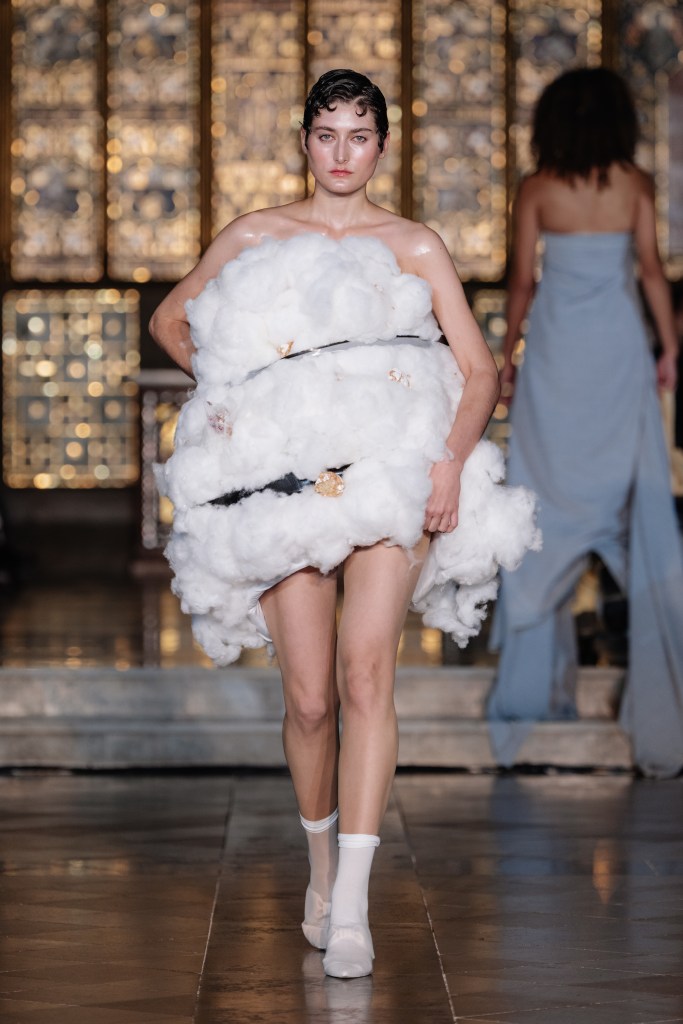
This season, fractures become metaphors: tailored shoulders unravel into silk transparencies, strict cuts melt into organic drapes, and deadstock textiles are reborn as “ghost fabrics,” each carrying echoes of resilience and renewal. The palette oscillates between restraint and rebellion — muted greens and maroons clashing with luminous transparencies — embodying a world where strength and fragility coexist.
For Iaciofano, fashion is more than form; it’s language, resistance, and healing. Founded in 2023, Poet-Lab has already carved out its space in the industry’s emerging avant-garde, transforming contradictions into catalysts. “Resistant When Opposites Break” is not simply a collection — it’s a manifesto stitched in defiance.
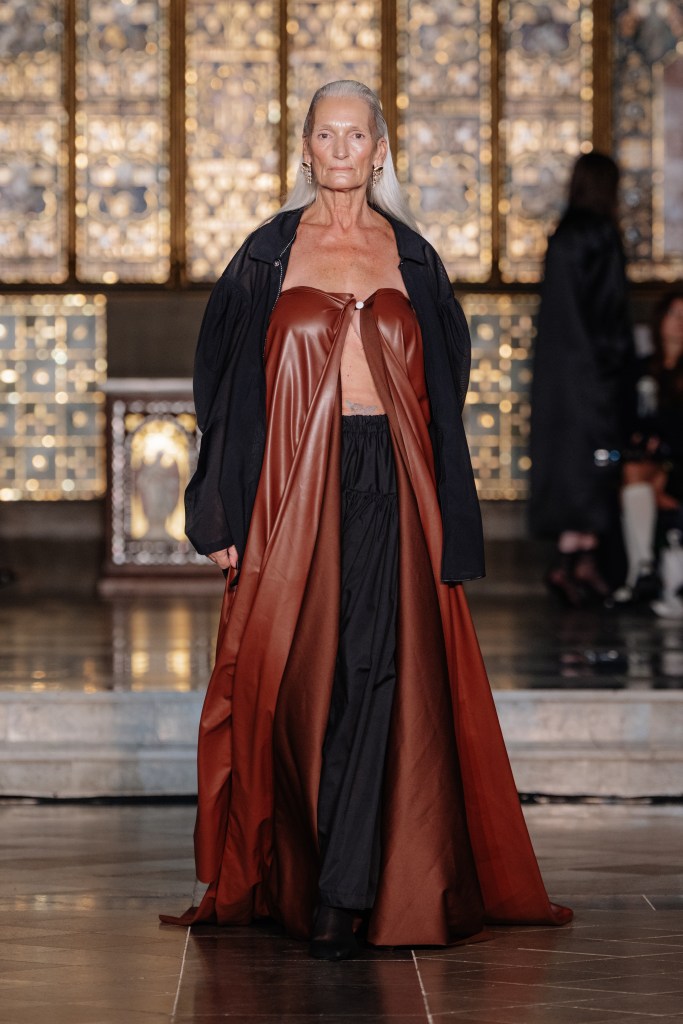
Exclusive interview with Giuseppe Iaciofano
Concept & Philosophy
Your collection is described as a “manifesto in fabric.” How do you approach designing clothes as a language where each garment becomes a sentence or declaration?
For me, clothing is a system of symbols it carries meaning before it’s even spoken. Each garment in Resistant When Opposites Break is written like a fragment of a larger poem: the cut is syntax, the fabric is tone, the silhouette is punctuation. I approach design as a language of resistance one that doesn’t conform to pre-existing grammar but creates its own. When a look walks, it speaks not through perfection, but through tension, through what is breaking and reforming in real time.
Resistant When Opposites Break” explores tension strength versus fragility, structure against fluidity. What personal or societal contrasts inspired this theme?
The collection was born from contradiction the idea that resistance and surrender can coexist. Personally, it reflects my own navigation between control and chaos, between vulnerability and assertion. Societally, it mirrors how we’re constantly asked to be both soft and strong, visible yet silent. I wanted to translate that duality into form garments that hold and release, that fracture and recompose much like how identity itself evolves under pressure.
You often describe fashion as resistance. What are you resisting in this collection aesthetically, politically, or personally?
I’m resisting uniformity the expectation that fashion must obey categories, seasons, or genders. Politically, I’m resisting erasure: the loss of individuality under mass production and overconsumption. Personally, I’m resisting stagnation the comfort of being understood too quickly. Every collection is an act of defiance against stillness, an insistence that beauty can exist within discomfort and change.
Design process & materials
The press release mentions “ghost fabrics” deadstock and recycled textiles reborn as stories of resilience. Can you talk about how sustainability and storytelling intersect in your design process?
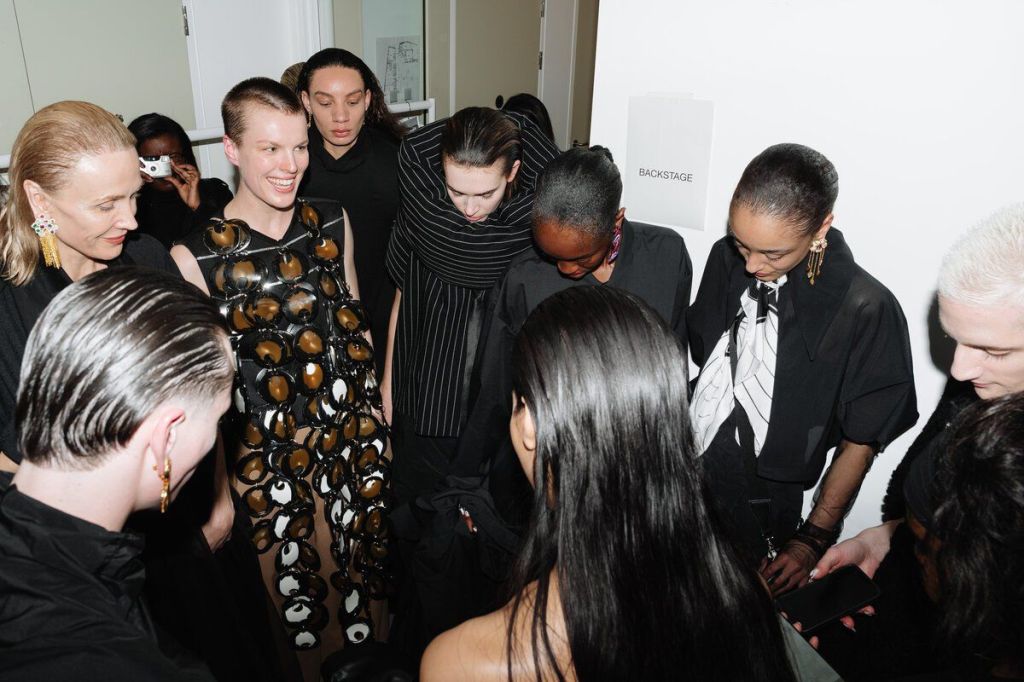
Sustainability, for me, isn’t an aesthetic it’s an act of remembrance. Using deadstock or recycled textiles means giving matter another life, turning what was abandoned into something that speaks again. Each fabric carries a ghost a previous history, a trace of touch and by reworking it, I allow it to tell a new story. The stitching becomes a kind of writing; the seams are memory lines.
The silhouettes in this collection seem to evolve mid-movement from tailoring to drape, rigidity to transparency. How did you technically achieve that fluid transformation in form?
I wanted the garments to feel alive to shift identities as the wearer moves. We experimented with modular pattern cutting, hybrid tailoring, and layered construction so a jacket might open into a cape, or a shirt might dissolve into sheer panels. The structure collapses into fluidity and rebuilds itself. It’s a choreography between precision and release.
You blur the boundaries between seasons AW and SS which is unusual. What prompted this rejection of the traditional fashion calendar?
Time itself feels fragmented so why should fashion follow a fixed cycle? The idea of seasonality feels obsolete in a climate that’s changing both physically and culturally. Resistant When Opposites Break exists outside those binaries summer can be layered, winter can be transparent. I prefer to design for emotional temperature rather than meteorological ones.
Visual & emotional language
The palette juxtaposes restraint and rebellion muted tones against explosive vibrancy. How did you use color as a narrative tool to express that duality?
Color became a dialogue the whisper and the scream. Muted tones represent introspection, decay, stillness; bursts of saturated color embody release, rage, renewal. I used contrast the way a poet uses rhythm to interrupt comfort, to provoke feeling. Every clash is intentional; it’s a visual way of showing resistance as both rupture and rebirth.
The collection references both the 1970s’ liberation and the 1980s’ power dressing, but you reimagine them through a contemporary lens. What drew you to those decades as points of reference?
The 1970s carried a radical softness liberation through self-expression. The 1980s were about armor, control, and assertion. I was interested in the conversation between those energies vulnerability and power and how they manifest today. My reinterpretation isn’t nostalgic; it’s a reactivation of their spirit, filtered through our fragmented digital age.
Many of your looks balance strength and vulnerability were there particular materials or silhouettes that best embodied that emotional contradiction for you?
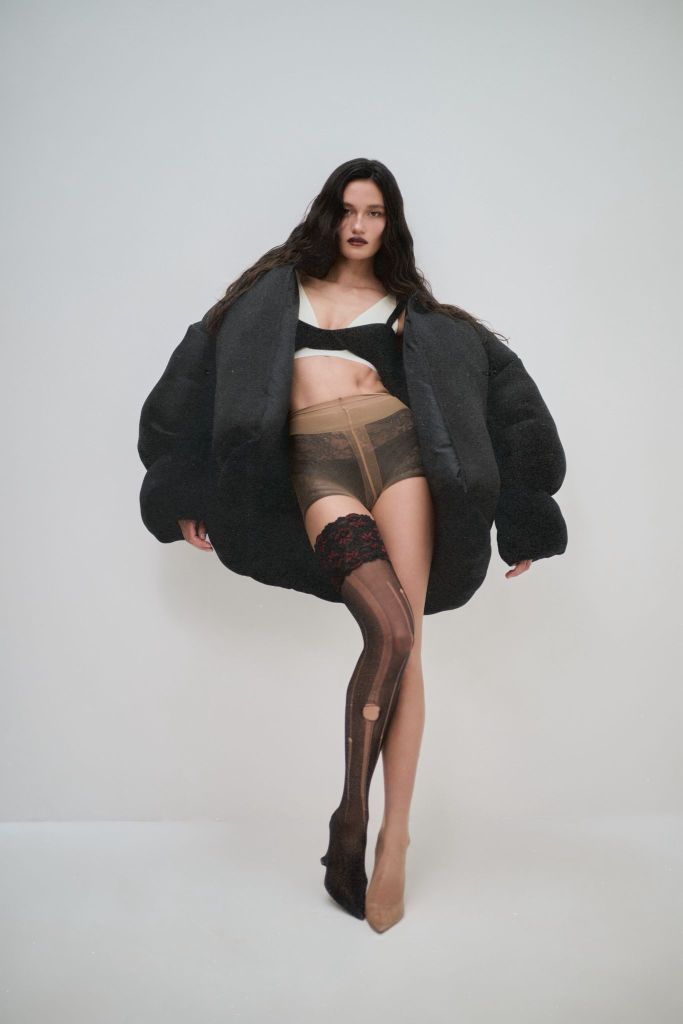
Yes the interplay between sheer and structured materials, or between metallic tailoring and deconstructed lace. A sculpted blazer lined with translucent organza, for instance, feels like protection and exposure at once. I’m fascinated by garments that look invincible from afar but reveal fragility up close that’s where truth lives.
Identity & inclusivity
Poet-Lab is known for its genderless, inclusive ethos. How does “Resistant When Opposites Break” expand or challenge your vision of inclusivity?
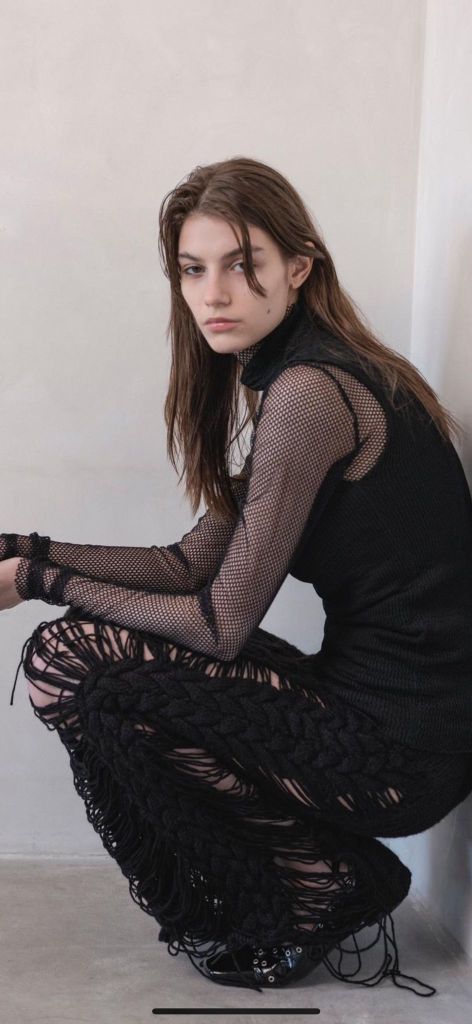
Inclusivity, for me, is not an aesthetic but an ethical position. This collection pushes it further it’s about dissolving the hierarchy of body, age, or gender entirely. The garments adapt rather than dictate; they respond to whoever wears them. Inclusivity here becomes fluid not representation as tokenism, but as freedom of expression without permission.Having Elton ilirjani from NYC, Elliott with 2 t from LasVegas supporting me with my own views of fashion!
You’ve said, “Inclusivity-ethical, for me, is one word.” How do you translate that philosophy into the practical aspects of design from pattern cutting to casting to styling?
It begins at the pattern stage I design on varied body types, not a single fit model. I work with modular shapes and elastic structures that shift with movement and proportion. Casting and styling are extensions of that same language each person is chosen not to fit the garment, but to transform it. Inclusivity becomes an ecosystem, not a checkbox.
How much of your personal story resilience, transformation, freedom continues to shape the narrative of Poet-Lab today?
Completely. Poet-Lab was born from my own process of resistance of rebuilding identity through creation. Every piece is a translation of that personal mythology into something collective. The brand is less about me and more about what happens when resilience becomes shared when people see themselves reflected in the act of becoming.
The future of Poet-Lab
The collection reads as a creative manifesto. What do you hope the audience takes away from it beyond the runway?
I hope they leave with a sense of permission to break, to rebuild, to exist in contradiction. That resistance doesn’t have to be loud; sometimes it’s the quiet act of staying soft in a hard world. Resistant When Opposites Break is an invitation to inhabit the in-between, to wear your becoming.
Poet-Lab is still a young brand but already deeply conceptual. Where do you see its evolution going next artistically or ethically?
The future lies in collaboration merging art, performance, and activism into a continuous dialogue. Artistically, I want to deepen the performative dimension of fashion turning runways into living poems. Ethically, I aim to refine our sustainable framework working with regenerative systems, local craftsmanship, and circular design. Poet-Lab will keep evolving as a collective consciousness rather than a brand an ongoing resistance written in fabric.


 My Goddess Complex
Leave a comment