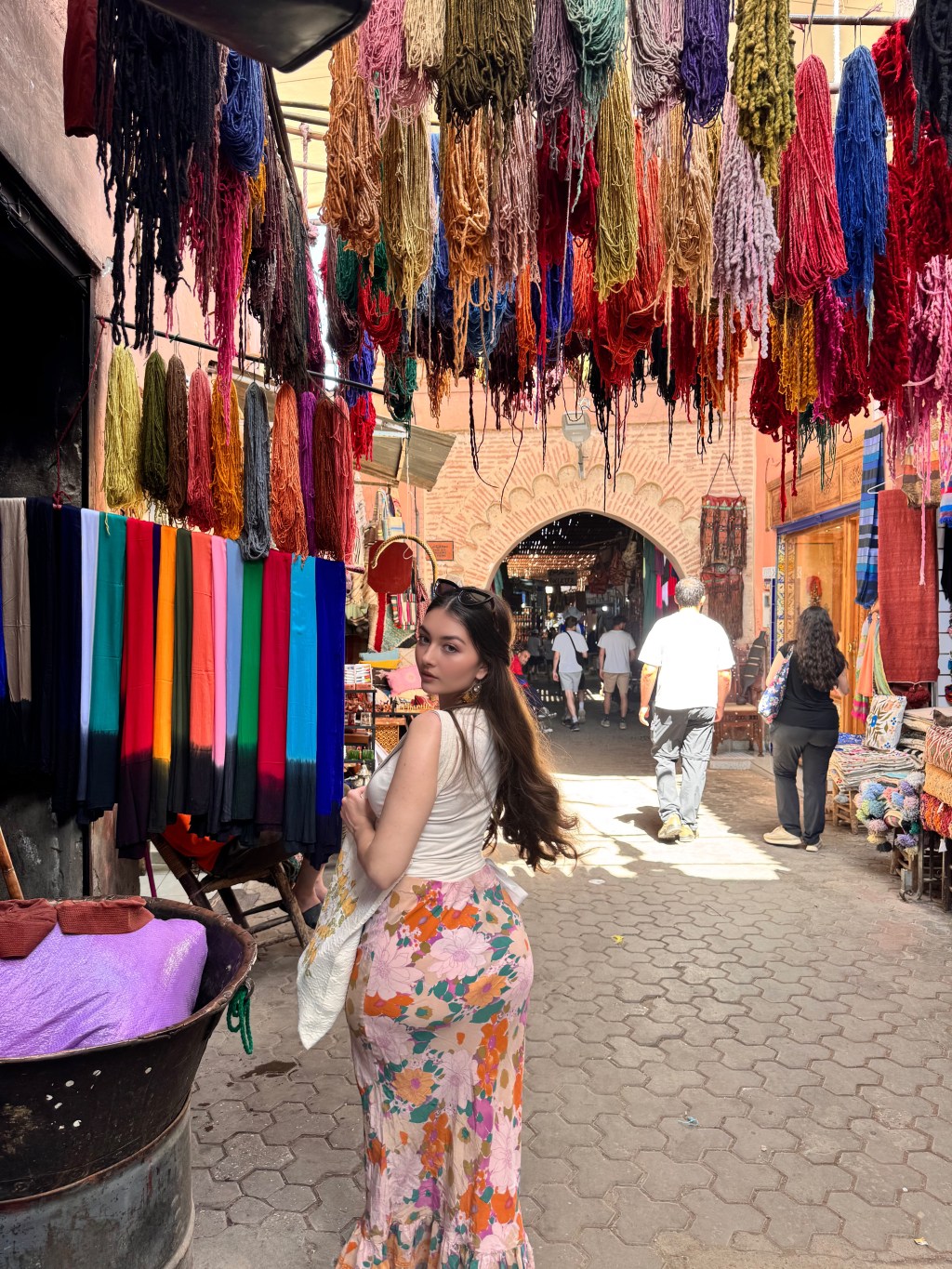
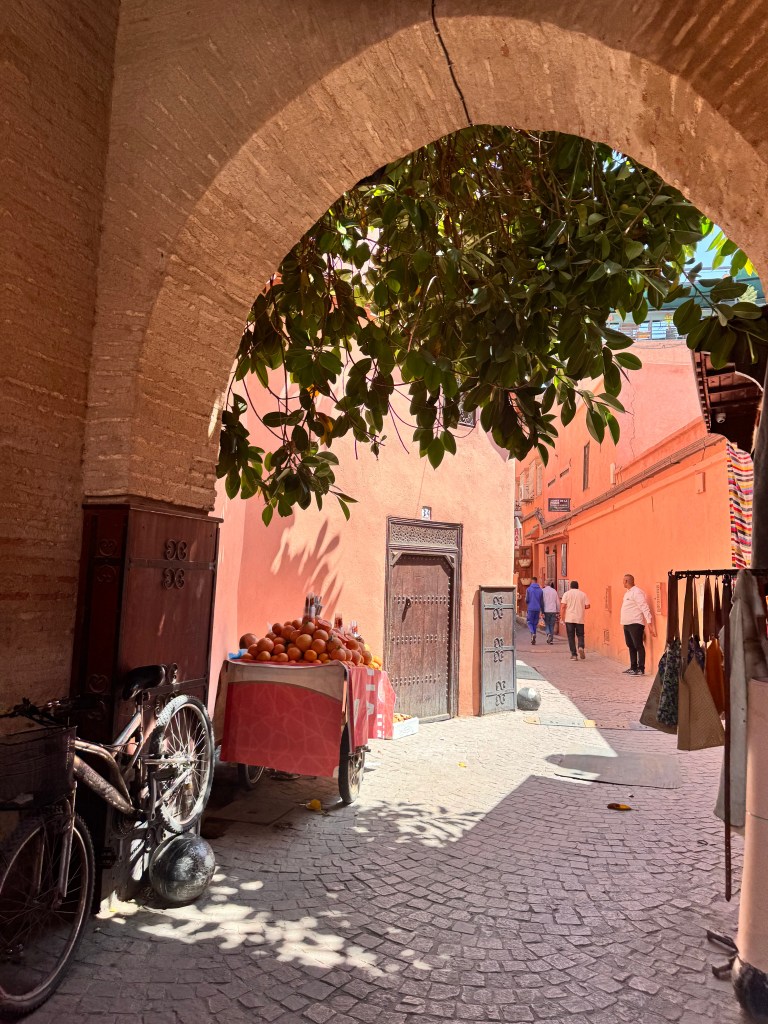


Our recent trip to Morocco marked my first time in Africa and the second time I rediscovered my senses. I moved from America to Bulgaria at nine years old, and felt a wave of culture shock and exhaustion, followed by an awakened anticipation of the new world before me, the fresh sights, sounds, smells, and emotions I felt bubbling up.
A tangible manifestation of a different stage of global development took form in this preserved, more potent culture. There, the collectivity of an ageing population meant ties to the children down the street, grandmothers next door dropping by with pastries, and spending three-month summers doing nothing at the beach. Some memories have faded, but similar feelings have roused from their 16-year sleep after my nine-day trip to Marrakech.
Virtually everyone who says they love travelling is a tourist, whether they have a backpack or two suitcases. I find it peak cringe to try to pretend that you’re in the 1% of ‘real’ travellers, which I won’t waste time defining, especially since the Western version of this probably existed pre-Y2K anyway. Only this time, I did feel changed on my way back home, if only by the glimpse into a completely different reality which exists only three hours away from London.
My only other journey outside the West was last year’s birthday trip to Phuket, Thailand, which took 25 hours to reach. While the nature was foreign beyond comprehension, with white sand monkey beaches and warm ocean water, and the temples were magnificent, we stayed in a luxury complex, and everything was catered to the comfort of tourists.
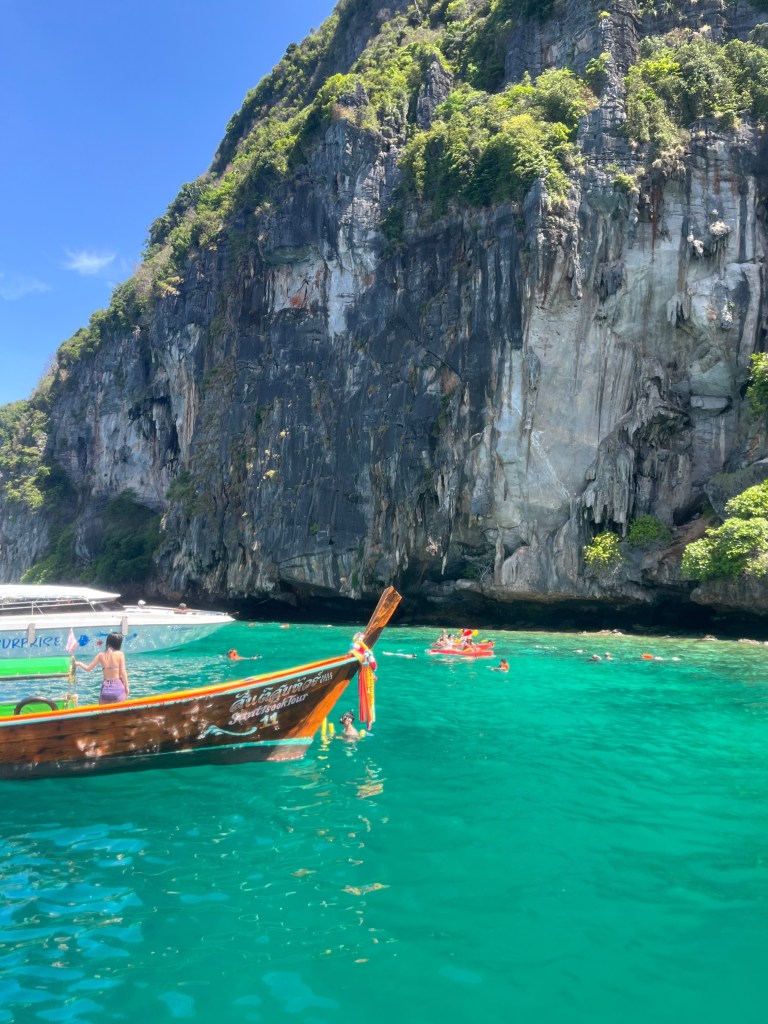

While the same could be argued for Marrakech, the ancient rhythms on which society operated centuries ago are still embedded in the city walls, laid bare to even a simple tourist like myself.
Night one in the maze of the Medina
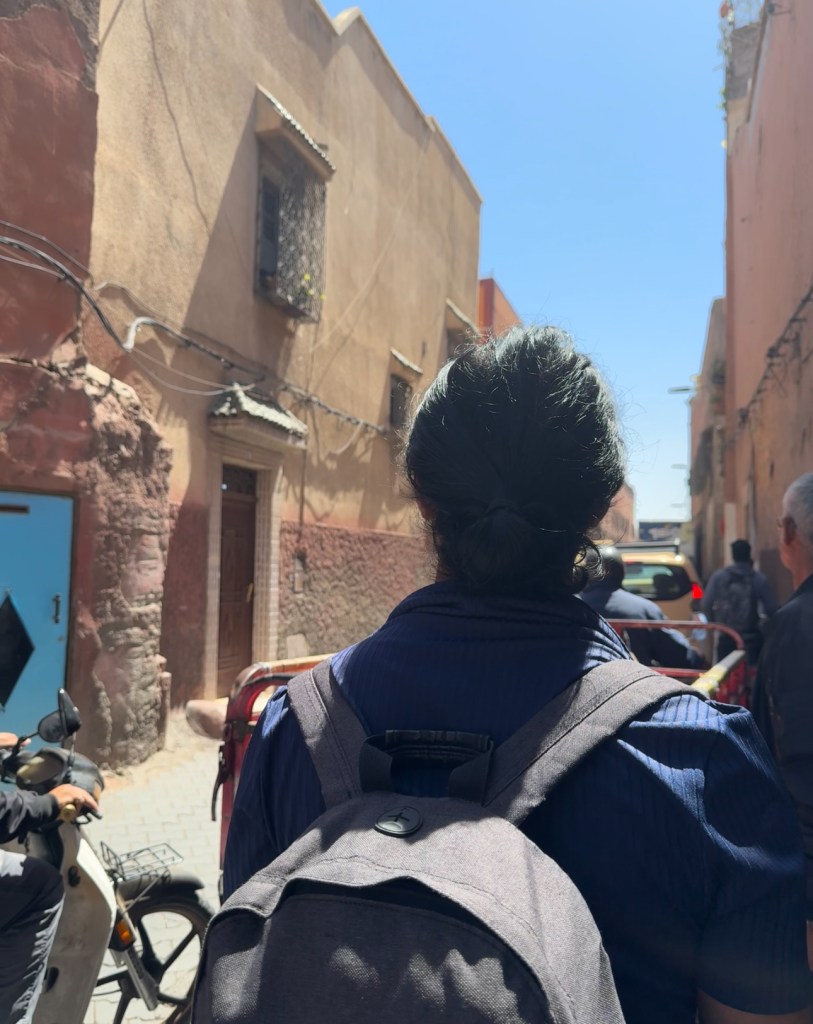
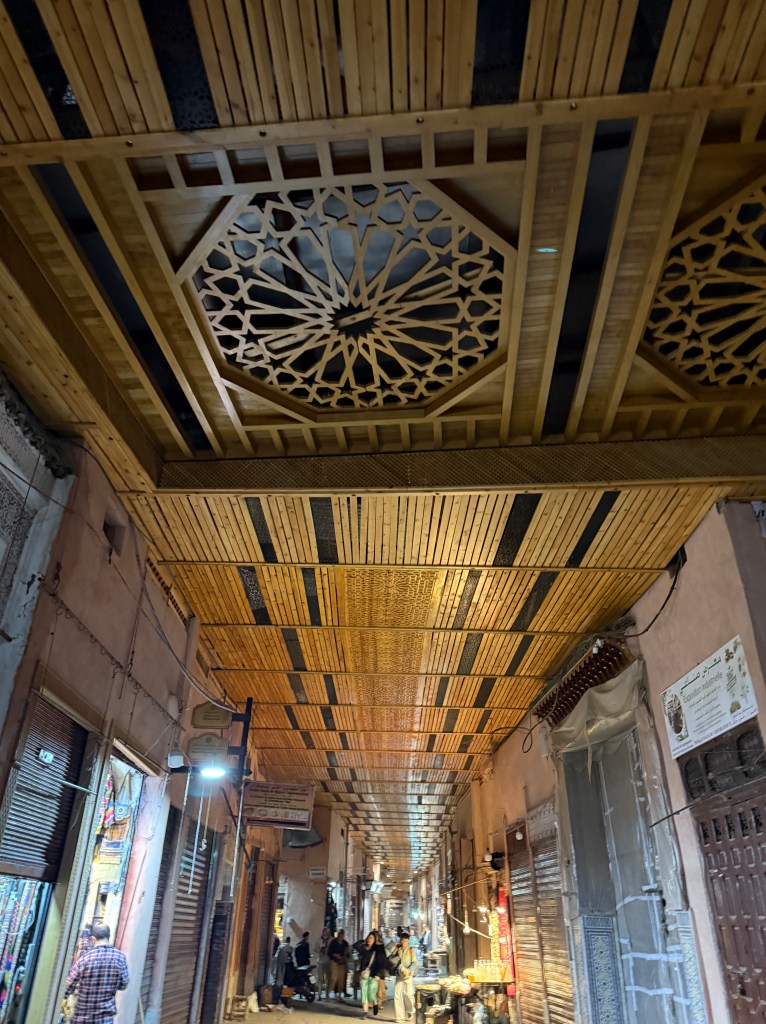
The first night was a bit of a culture shock, which we look back on fondly. After navigating the gazes that greeted us at the airport and finding our way to Mustafa, our kind driver, we were dropped into the middle of the smallest yet busiest street in Marrakech. Clinging to the walls, motorbikes rustling our skirts, we finally made it to our four-story riad. Boasting a garden alcove, three bedrooms, three bathrooms and two rooftops, our temporary home was decorated in traditional furniture and art pieces, probably bought in the Souks.
Before we had time to unpack, we decided to trek to the Western burger chains we saw on our way here for dinner, thinking they would take a card (pro tip: change enough of your cash at the airport). It was already almost 8 pm, and the muezzins were singing for the first time as we raced back down the main street, hopping to the side to avoid a donkey and admiring the assertive traipse of the local pedestrians.
We turned into the Souks for the first time, skipping past Limoni, an Italian restaurant garden we became obsessed with by the end of our stay. If we had gone inside that night, we wouldn’t have experienced the real Marrakech.
Even in the dim light, jewel-toned dresses, heavy Moroccan carpets, magic lamps and wooden camels caught my eye as we rushed past shopkeepers who shouted unabashed compliments to my sister and me in hopes of a last-minute sale or simply some entertainment. “How many horses for you?”, “princess” and “ooh la la” were the most common words which echoed off our footsteps. While I was uncomfortable, the cultural relativist in me just kept it moving.
We got lost multiple times, losing data and accidentally weaving ourselves further into the spider’s web of the medina, backing away from damp dead ends at the helpful words of the younger guys who sat on the stoops, smirking at our helplessness.
Everyone had somewhere to go, something to hustle, from morning or night, apparently. Eventually, the streets opened onto the Jemaa el-Fnaa, the main square in Marrakesh’s medina quarter.
To my inexperienced eyes, built on subconscious Orientalist tropes and Disney-fied movies, it was like a scene from Arabian Nights. Groups of Moroccans, Arabs and Berbers, were huddled around musicians playing on drums, flutes, stringed instruments and castanets. Snake charmers draped in red, trying to catch our eyes, as awake as ever, were shrouded by clouds of smoke.
Of course, there were tourists, but there was an air of liberation now that working hours were over, and mostly local men were sprawling across the square, those who weren’t at the men-only cafes, smoking kif, drinking café noir and watching football. Achraf Hakimi, a Moroccan footballer in Paris Saint-Germain, was set to play against Arsenal soon, and my boyfriend was also itching to watch it, only from the other side of the fence.
We inhaled our burgers and reluctantly got up to start the return journey – 20 minutes on Google maps, 40 when you take in our infantile reflexes in the maze which lay ahead. Back home, we floated to our rooms and collapsed onto the ikat patterns of our duvets. I had very scrambled dreams, awaking at the call to prayer which sounded at 4am. By the end of the trip, it morphed into the background of my dreams and I slept through everything.
All images my own

This became our everyday route, and by the end, we were proud of how we remembered our way around the medina, more from muscle memory than any real physical cues. The next day, everything looked completely different in the light of the morning, with just as much colour but a little less chaos. Yes, the traffic kept us on high alert, but the intoxicating smells of the Beghrir stalls (Moroccan pancakes) and the carefully organised medina tour we booked brought us back to Tourist ville.
Dreams and observations
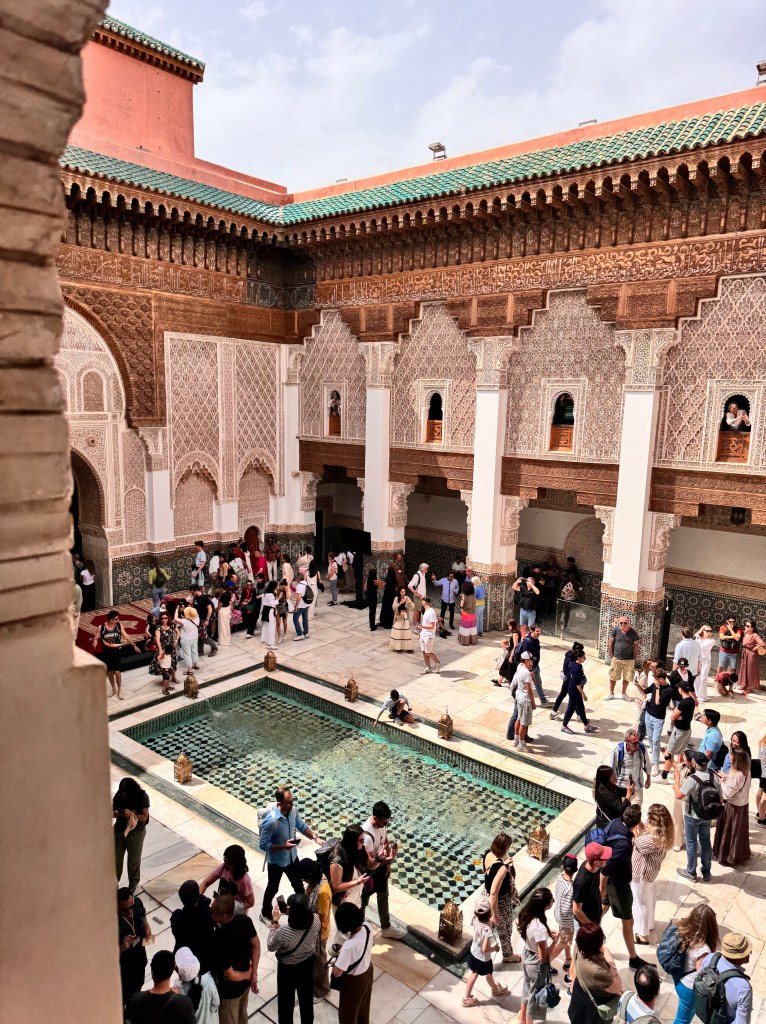
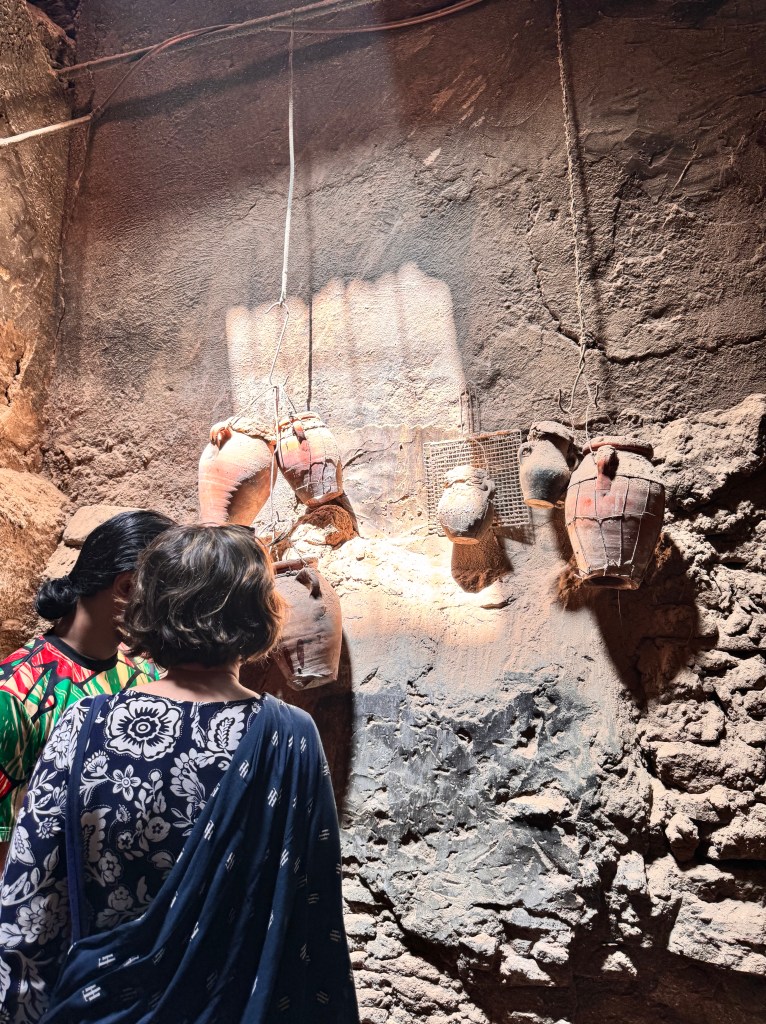
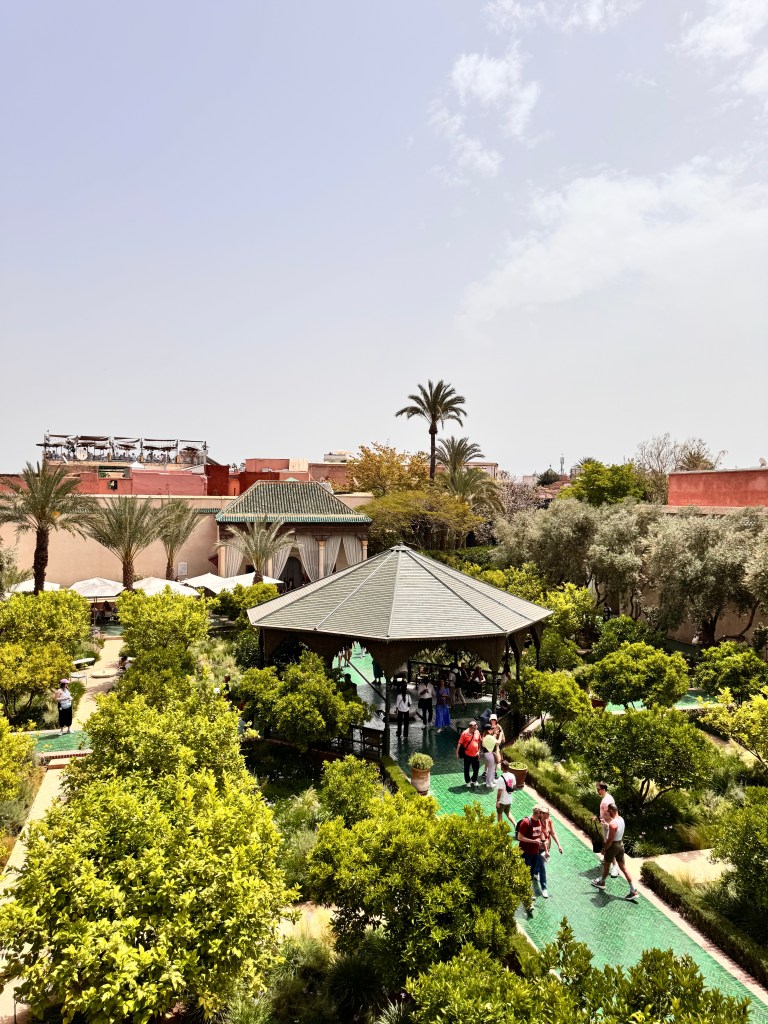
After stopping by a wool shop (camel wool, surprisingly, felt very rough) and finding ourselves literally inside a traditional oven, we went to the Ben Youssef Madrasa, an ancient Quran academy, and Le Jardin Secret, a secret haven from the busy streets, that belonged to Saadian aristocracy.

All images my own
Another secret ingredient to Marrakech’s magic were the endless amount of hidden oases where the stone walls, chirping birds and trickling fountains inside immediately submerged you into a quiet luxury that felt so far away from the busy markets.
For dinner, Mustafa zipped us over to Gueliz, nicknamed the ‘new medina’ to refer to the developed areas of the city outside the old walled medina. After shopping at the mall, we made it to La Tratorria, “an oriental Italian and art deco farandole”, a haven for both Gen Z vloggers and Gen X aesthetes in love with creamy pasta.
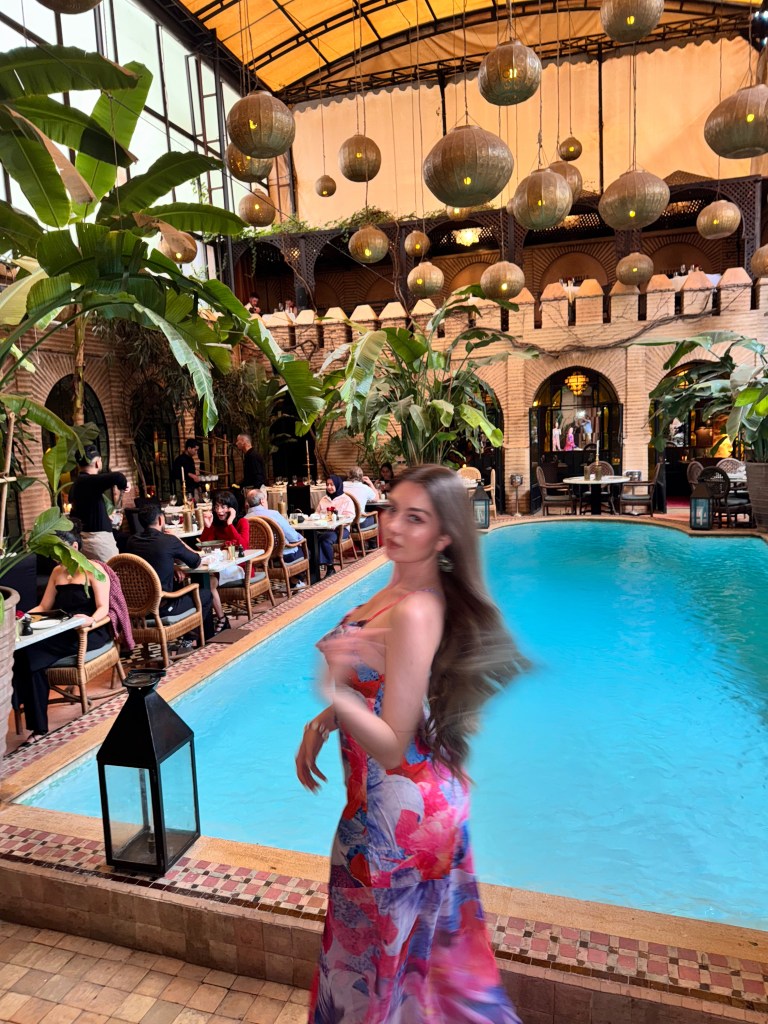
All images my own
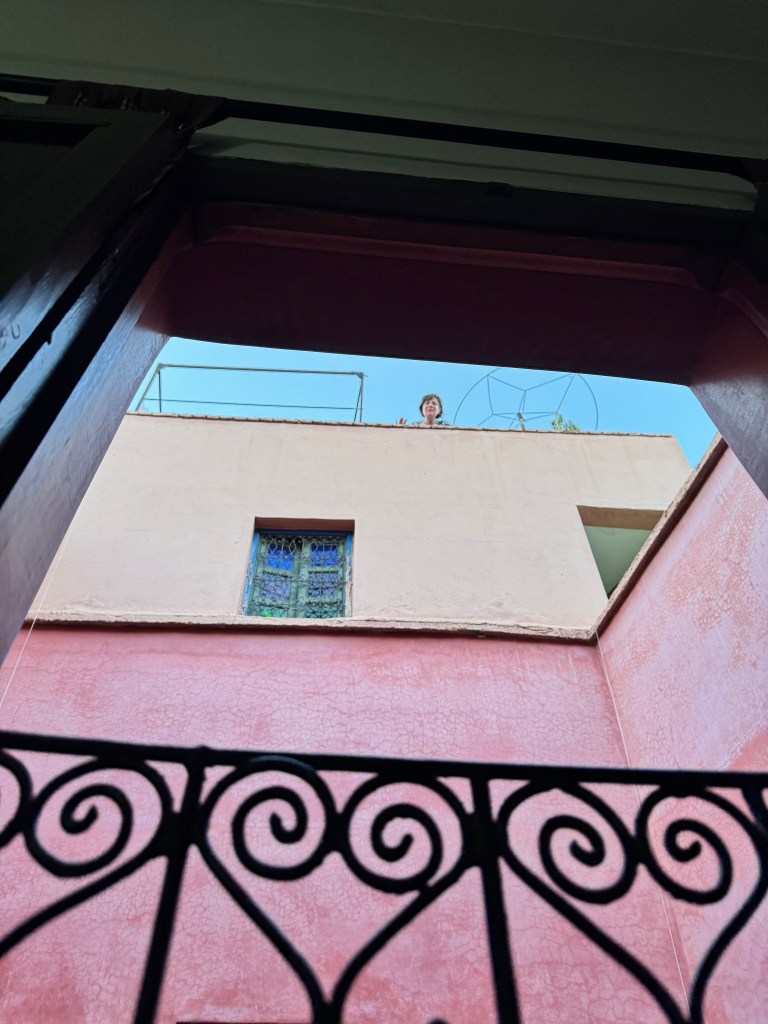
That night, I no longer had nightmares, but rather experienced my first lucid dream, where I controlled everything I wanted to do in the otherworld of my subconscious. While I won’t share the personal details (or desires) this unveiled, it took me back to the magic of childhood, and I’m certain it couldn’t have been triggered anywhere else.
Starting our days with coffee and toast in the pink walls of our courtyard, smooth, jazzy covers bounced throughout the house with the chirps of robbins. We spoke to each other from every floor, shouting our names from the kitchen and expecting a lazy response and a head popping down from the roof.
Not even La Mamounia would have felt more luxurious, especially as we were hidden and protected from the contrasting traffic and sensations outside, which I wouldn’t have traded for the world on this excursion.
Below, I’ve recounted our itinerary for the rest of our seven days total, excluding the two days we took to rest and explore casually, since we had them to spare. This included day trips to the beach town, Essaouira, Ouzoud Falls, Agafay Desert for camels, quad bikes and a night show, and a hot air balloon day that was more than just a tick off the bucket list.
Stories & storytelling
Something you won’t find in most Marrakech guides is the World Storytelling Cafe, an experience that defined the theme of the trip and made me learn more about the Arab world and traditions than any of the prepackaged tours we had booked.
This is Marrakech’s first exclusively vegan cafe, which collaborates with the Storytellers Union to host festivals that bring storytellers together from across the world. The most recent theme was BAHJA, encapsulating the uniquely Marrakech spirit of Joy, Hospitality, and the healing power of stories.


All images my own

My mother and I sat around a table with a mint tea and a mango smoothie when a spectacled young guy hesitantly came up to us. After introducing himself timidly, his voice suddenly rose a few octaves. “ONCE UPON A TIME,” he bellowed…
The story (paraphrased from memory):
Once upon a time, there was a water seller called Murad who worked in the square (you may have seen him even today, with a colourful red hat on his head). He complained to his wife, “No one is buying my water, please help me!”
So she infused it with raisins so the taste was like little drops of heaven.
He went back to the square, but everyone was still ignoring him, and no one was buying his water yet again.
Murad went back to his wife, saying: “Wife, please help me, no one knows that my water tastes good so no one is buying it!”
She told him, ring this bell and say this phrase: “He that digs a pit will fall into it, and he that rolls a stone, it will roll back on them. But he who is holy and good will be blessed with heaven.”
He went back to the square, rang his bell and said, “He that digs a pit will fall into it, and he that rolls a stone, it will roll back on them. But he who is holy and good will be blessed with heaven.”
Adults and children tried his water, saying, “It tastes like heaven!” He became the most popular water seller in Marrakech and news about Murad’s water spread throughout the kingdom.
The sultan heard of Murad’s miraculous water, so he invited him to the palace to personally serve him water and give him lots of money.
The vizier (prime minister) heard of Murad’s fame and became very jealous of the attention he was receiving from the sultan. He devised a plan to fix the situation and remove Murad completely.
So, the vizier went to Murad, telling him that his breath smells and the king is complaining. Murad started wearing a veil over his mouth whenever he served the sultan.
“Why does Murad always wear that veil?” the sultan asked the vizier.
“He says that your breath smells, your majesty,” the vizier replied.
“WHAAAAT. This is unacceptable,” cried the sultan.
So, the sultan told the guards to await a man exiting the palace holding gold jewels, and to execute him immediately.
He called Murad to his throne room and said, “Murad, I am rewarding you for your good work with these golden jewels. Please, take them home with you.”
As Murad was leaving excitedly, the vizier spotted him holding the jewels and stopped him in his tracks.
“Murad! What are you doing? How dare the sultan give you these jewels! I deserve them, not you! Give them to me!!”
They fought over the jewels, before the vizier was victorious and haughtily carried the jewels out of the palace.
However, the guards saw him holding the jewels and remembered the sultan’s instructions, and they executed him immediately.
“What!” The sultan ran out of the palace, shouting with his hands on his head. “Why did you kill him?”
“You told us to execute the man holding jewels!” The guards cried.
The sultan looked at the jewels and at Murad, finally understanding what had happened.
“Why were you wearing the veil, Murad?” The sultan asked.
“The vizier told me that my breath smells, your majesty,” Murad shamefully replied.
“Oh Murad, but don’t you understand? It was true all along, your phrase: ‘He that digs a pit will fall into it, and he that rolls a stone, it will roll back on them. But he who is holy and good will be blessed with heaven.’ The vizier tried to dig a hole and so he ended up in the hole.”
The sultan felt so bad about what he had done that he awarded Murad with riches beyond his imagination so that he and his family could live happily forever without having to work another day in their life.
He revealed that he was part of the storytelling school in Marrakech, which used to be a large part of the now more commercialised square. Our personal experience with the water sellers was taking a picture with them, before they refused our coins, and then demanded all of our Dirhams once we insisted.
At the end, it was the storyteller’s turn to ask questions about the storytelling traditions of our cultures, Bulgaria and Atlanta, the latter of which particularly prised storytelling as a way of preserving history and shaping identity, especially for Black Southerners. He also emphasised how a story changes based on the storyteller’s interpretation. He, for example, chose to emphasise the woman’s role in the story.

In Arabian Nights
I’ve been ‘travel reading’, trying to read a book from each country I visit, either by an indigenous author or somehow related to the place. This time, my choice was In Arabian Nights, by Tahir Shan.
While the autobiographical pace was slower for me, someone who identifies as a fiction fanatic, I liked the casual, anecdotal case Shan made for the power of stories and storytellers, as we follow his journey into finding the “story in his heart”, an old Berber (or “Amazigh”) tradition (which the Berber cafe storyteller hadn’t actually heard of). I’m not sure if it exists or not, but I love the idea of it and the way Shan demonstrates the different way of Moroccan thinking, which most visitors barely know exists.
He uses his father, another writer whose stories help Shan get through his time in a Pakistani prison, as one of his primary teachers about the power of fiction.
“The stories are like encyclopaedias store storehouses of wisdom of knowledge ready to be studied, to be appreciated and cherished. To him, stories represented much more than mere entertainment. He saw them as complex psychological documents, forming a body of knowledge that had been collected and refined since the dawn of humanity.”
Later, he elaborates on this:
“Stories are for everyone, not just for children, but sometimes people forget that. When grown-ups hear stories, sometimes they don’t realise that they are very clever things.”
According to Shan’s father, stories predate schools and fuel his dream to start a college of Storytellers, one which still exists in Marrakech.
Shan treats stories as the most precious preservation of life and culture, and illustrates the power of oral storytelling in Africa and the Arab world, where people look down on the written word, so prized in the West, as “an insult to the mind”.
He recounts a man who gives trinkets away for free, but charges for the story that is attached to them, as well as a man who makes a business by memorising things, and represents “a link in a far more ancient chain, a chain that existed since the dawn of humanity and is now under threat – that of the spoken world.” In contrast, this tradition is almost lost in the West, where we celebrate the written word as an escape from the deadening effects of television and computer games.
Back in London, I took a walk in our local park, now eerily quiet and gaudily green, the wet mud under my feet unfamiliar, the looming clouds practically offensive. Everything was so sunny there, while everyone here was in a bad mood and basically ignored each other.
Even if my memories fade again and fate never brings me back to Marrakech, the stories, lessons and sensations from this trip will stay with me far after everything else is forgotten. Tourism or not, the stories I learned and created became a time capsule of my time here and a time more ancient than we can imagine.
Watch my vlog
7 perfect days
Day 1
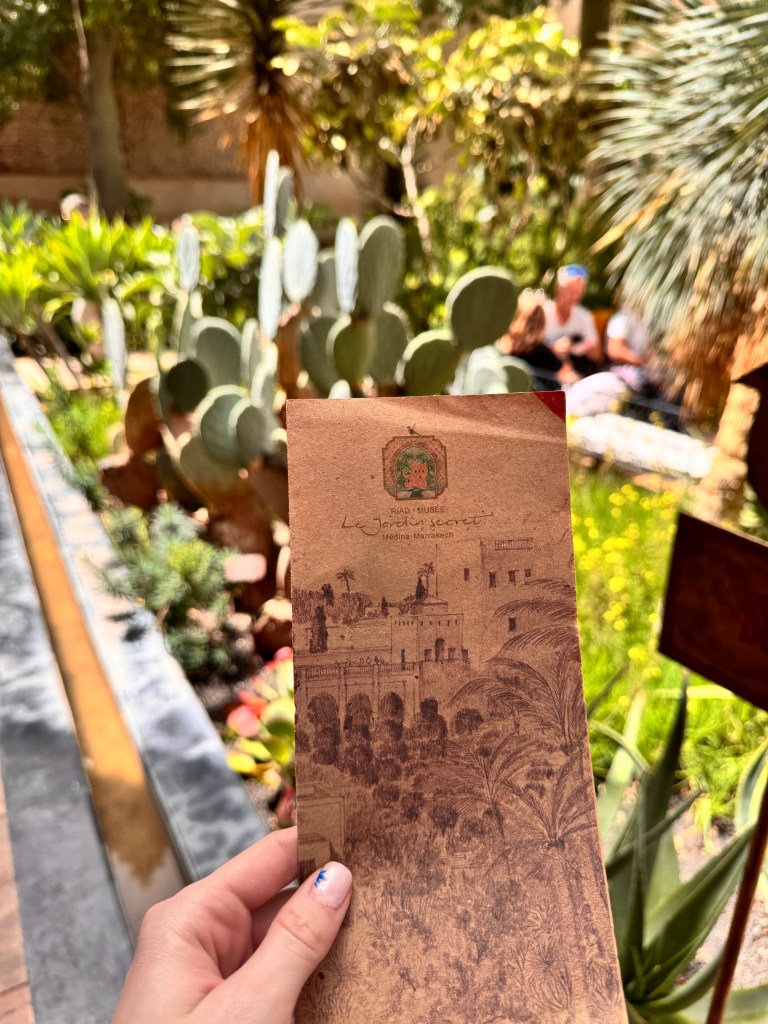
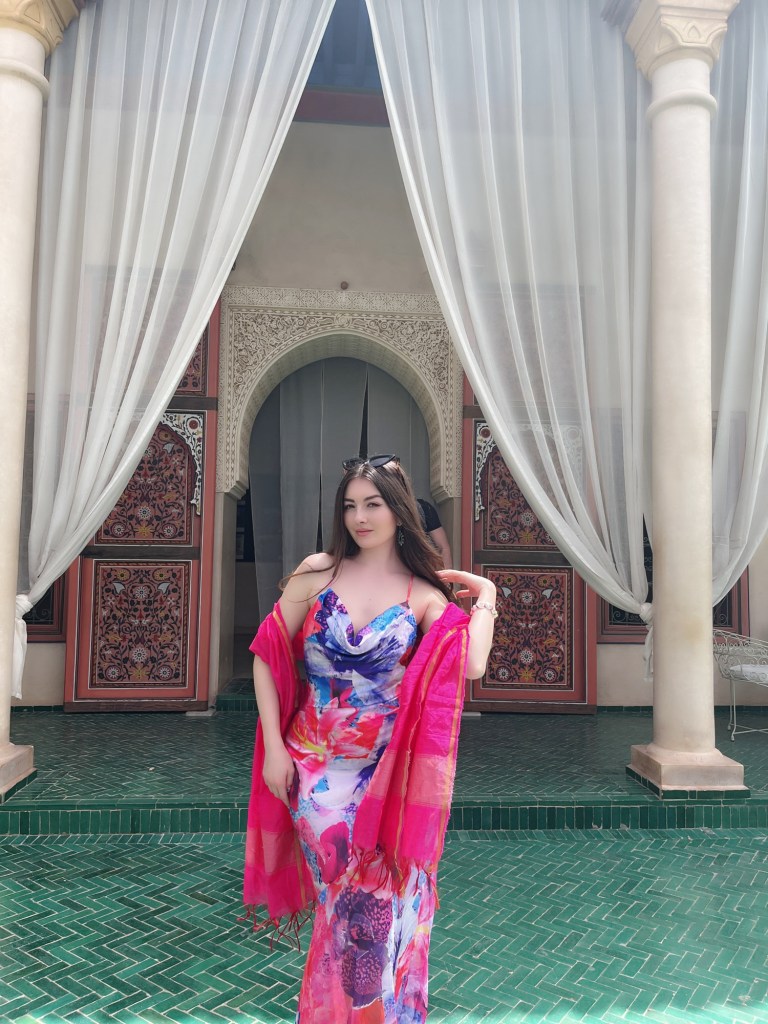

Book a walking tour of the Medina, which stops by Ben Youssef Madrasa and Le Jardin Secret. Have lunch at the cafe inside the gardens, then get some dinner at La Trattoria (make sure you get a poolside booking).
Day 2
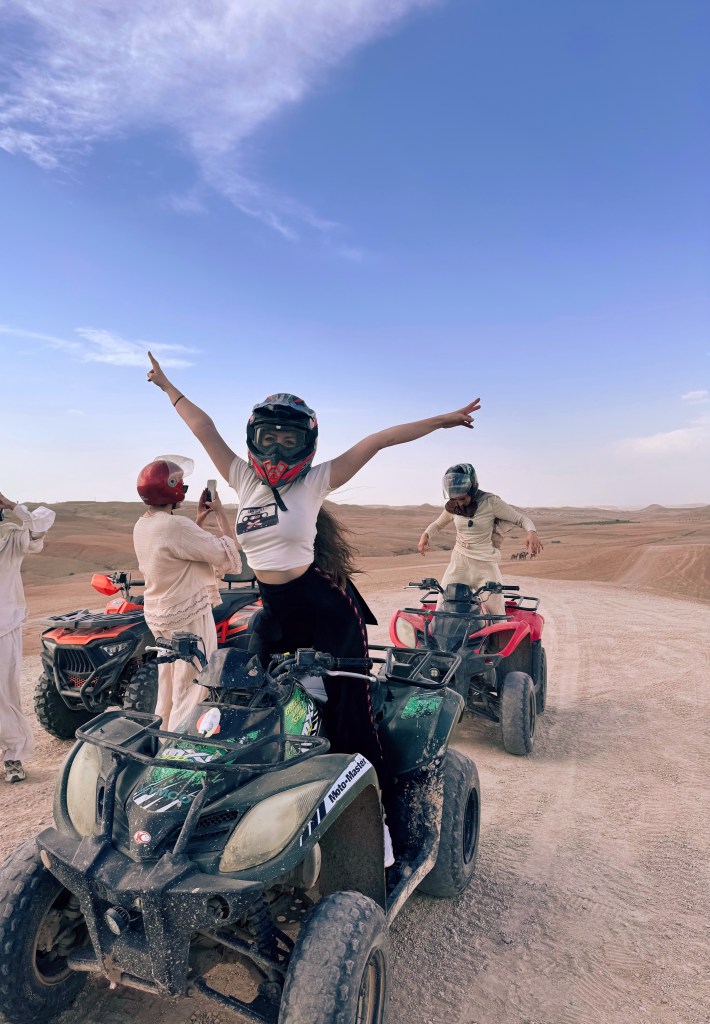


Book a desert package to Agafay valley, which starts at 2 or 4pm. If you book earlier, you’ll have more time to chill at the desert and enjoy the sunset. (£20 pp)
Get lunch at Restaurant Le Jardin Ben Youssef before you head off (we kept coming back here).
Day 3

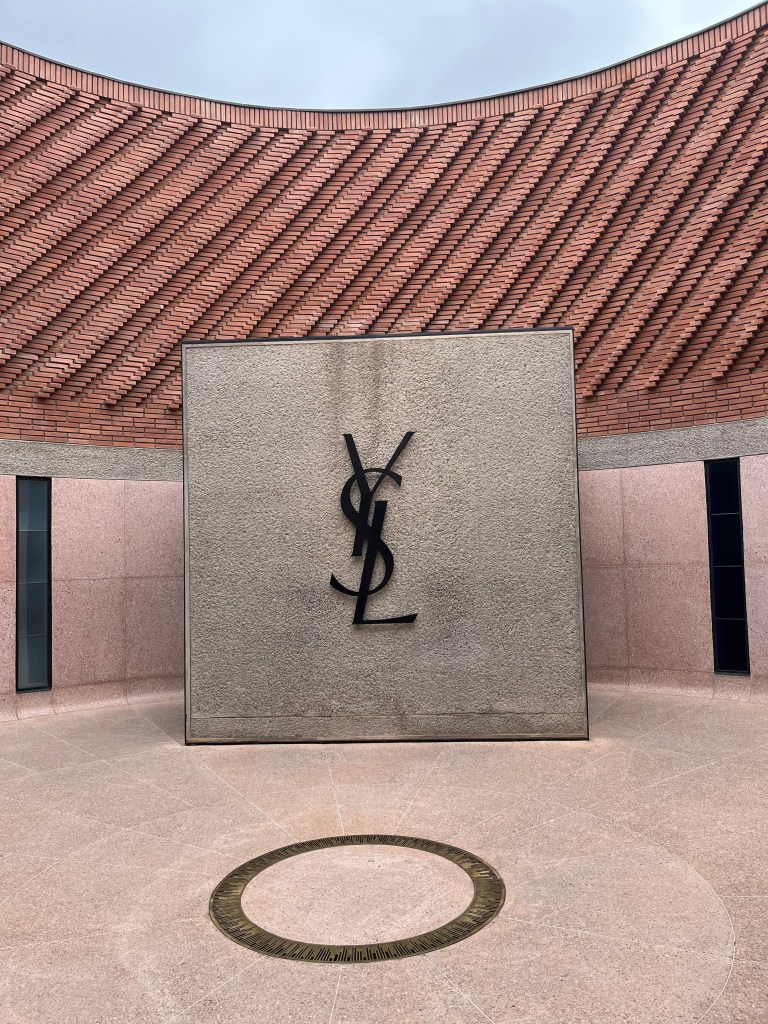
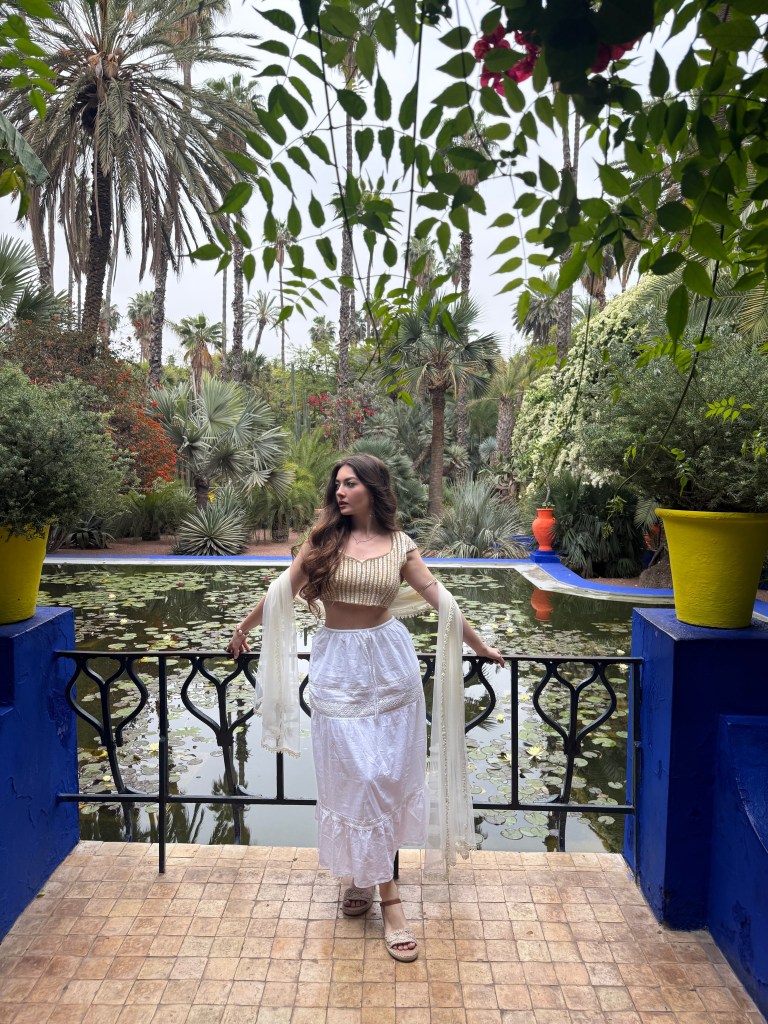
Go to Le Jardin Majorelle and the YSL museum for an insight into fashion history. Get lunch at Le Majorelle. (£50 pp)
Day 4

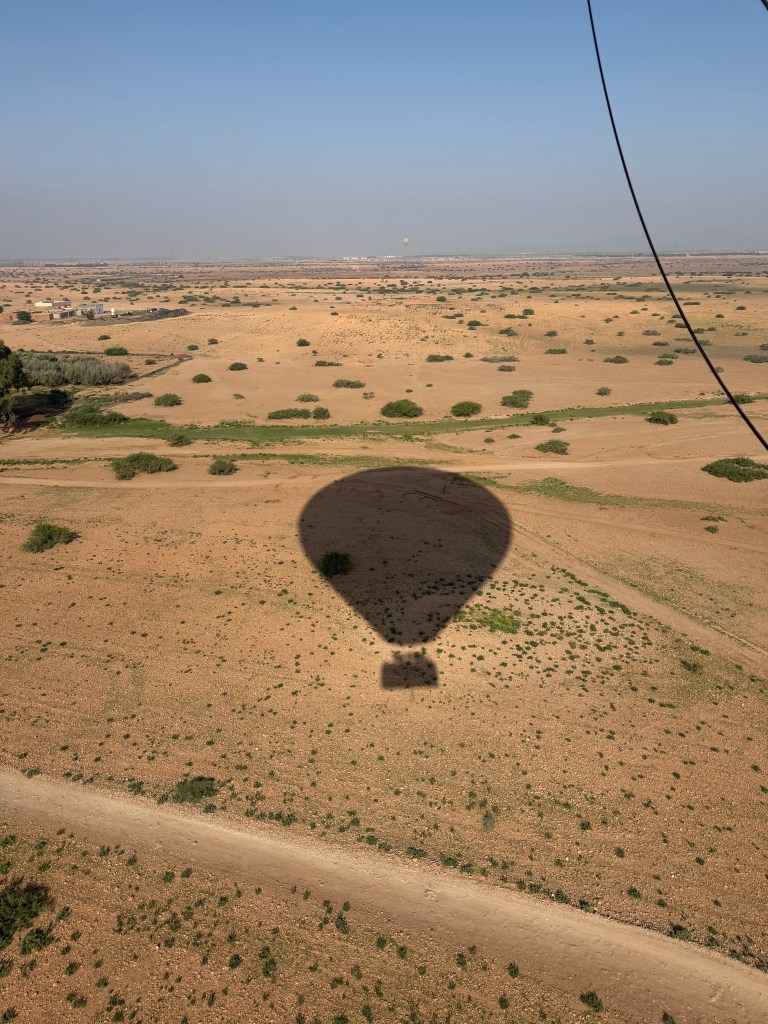

Go on a hot air balloon excursion with a traditional Berber breakfast. Usually starts at 5am for a sunset viewing or 7am for a more relaxed morning. (£100 pp)
You’ll finish early, so this is the perfect time to try a Hammaam spa and get dinner at La Fontaine des Epices.
Day 5
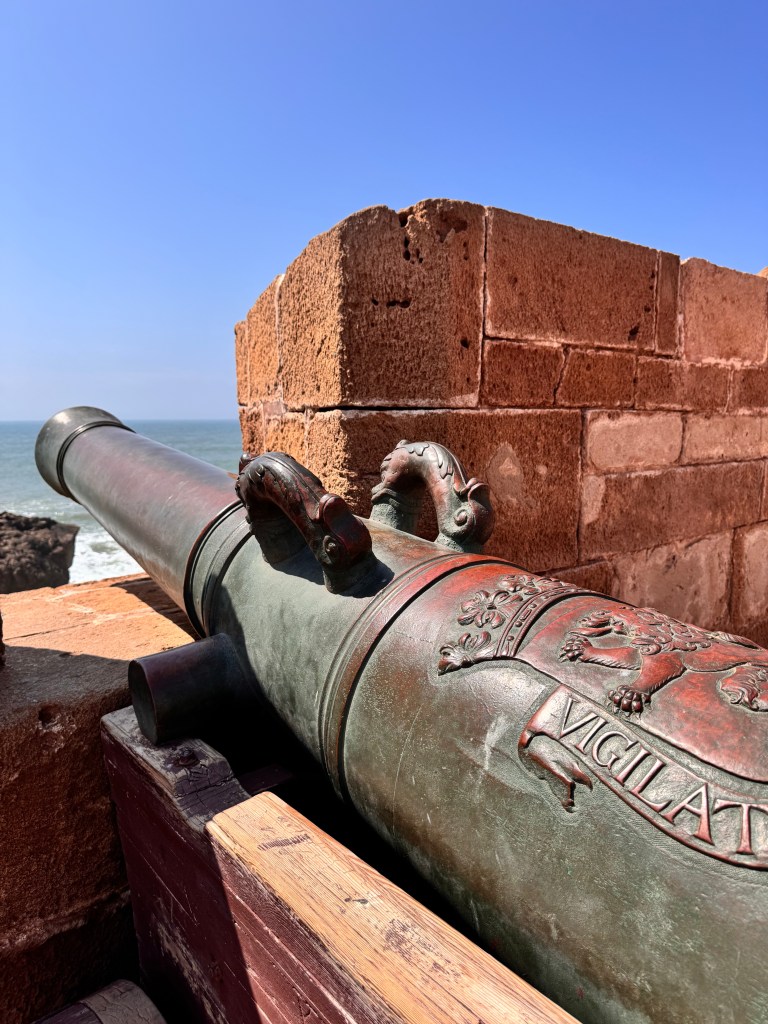
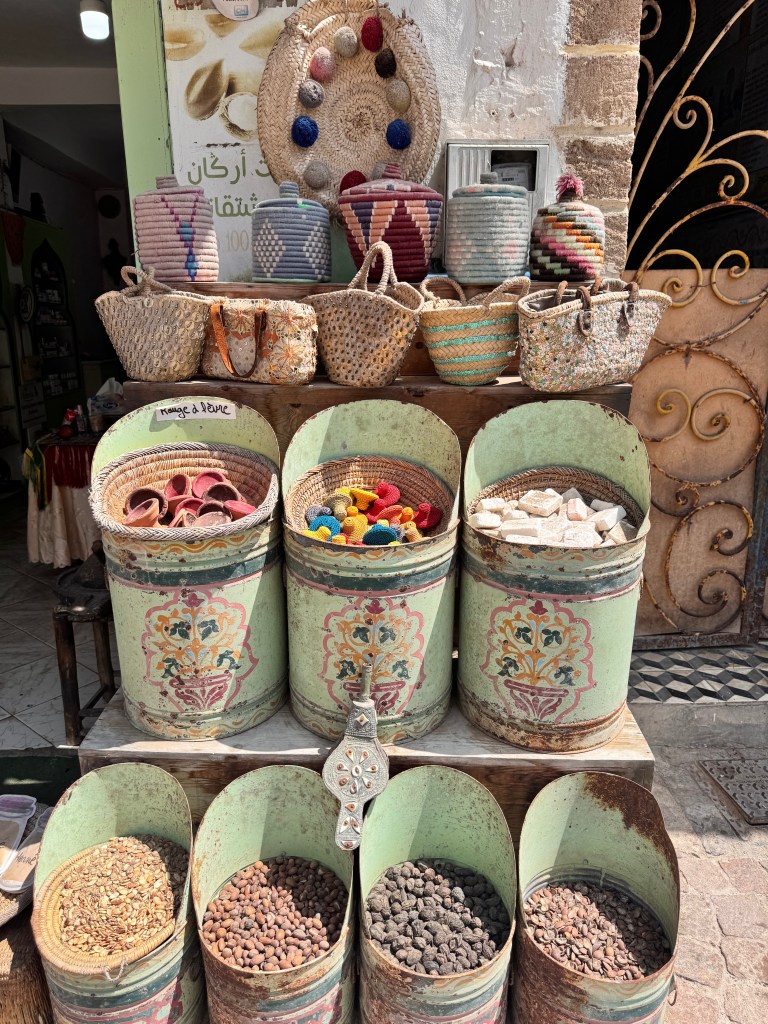
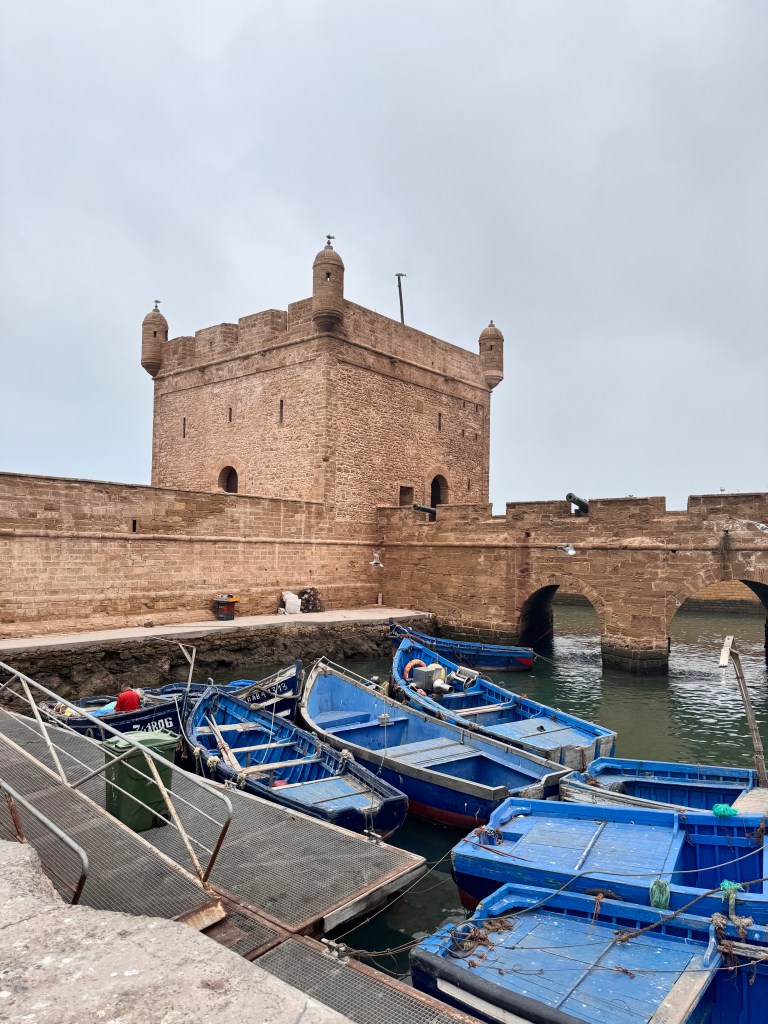
Take a day trip to Essauoira, walking by the beach and exploring the Game of Thrones filming places. (£20 pp).
Day 6
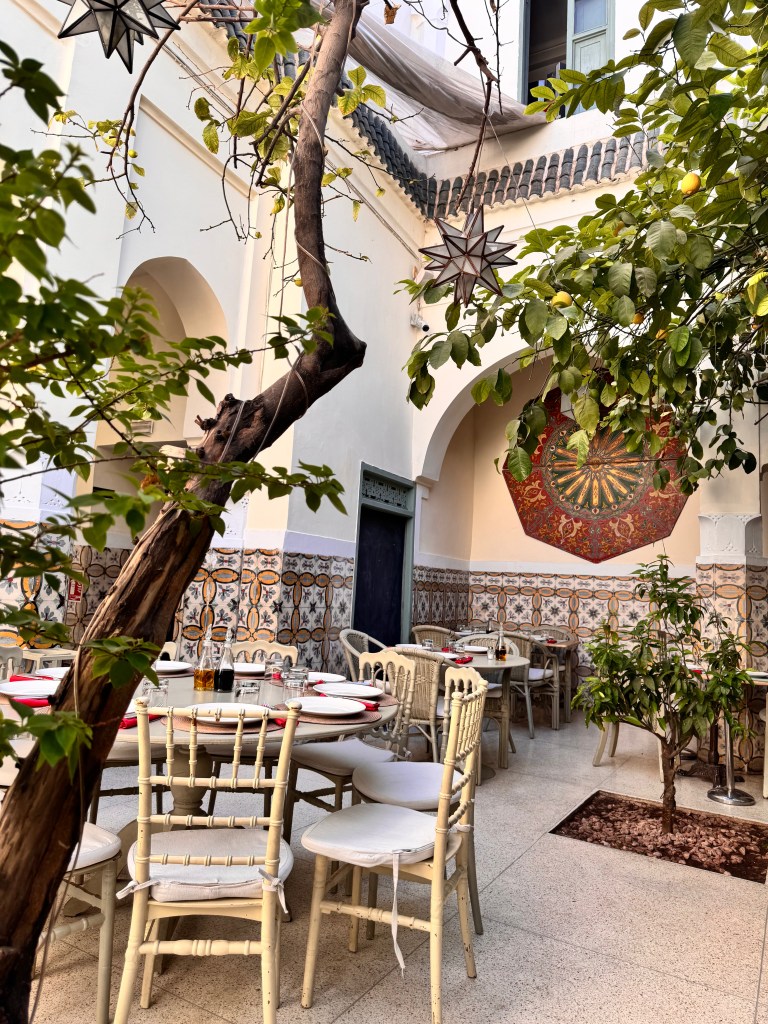


Explore the palaces, stop by the World Storytelling Cafe, and try a pottery class. Get dinner at Limoni.
Day 7


Book a trip to Ouzoud Falls, Africa’s second biggest waterfall (after Victoria Falls) to marvel at the nature and feed some monkeys. This includes a 30-minute hike down, a boat trip (additional charge) and lunch (additional charge).
Traditional Moroccan food:


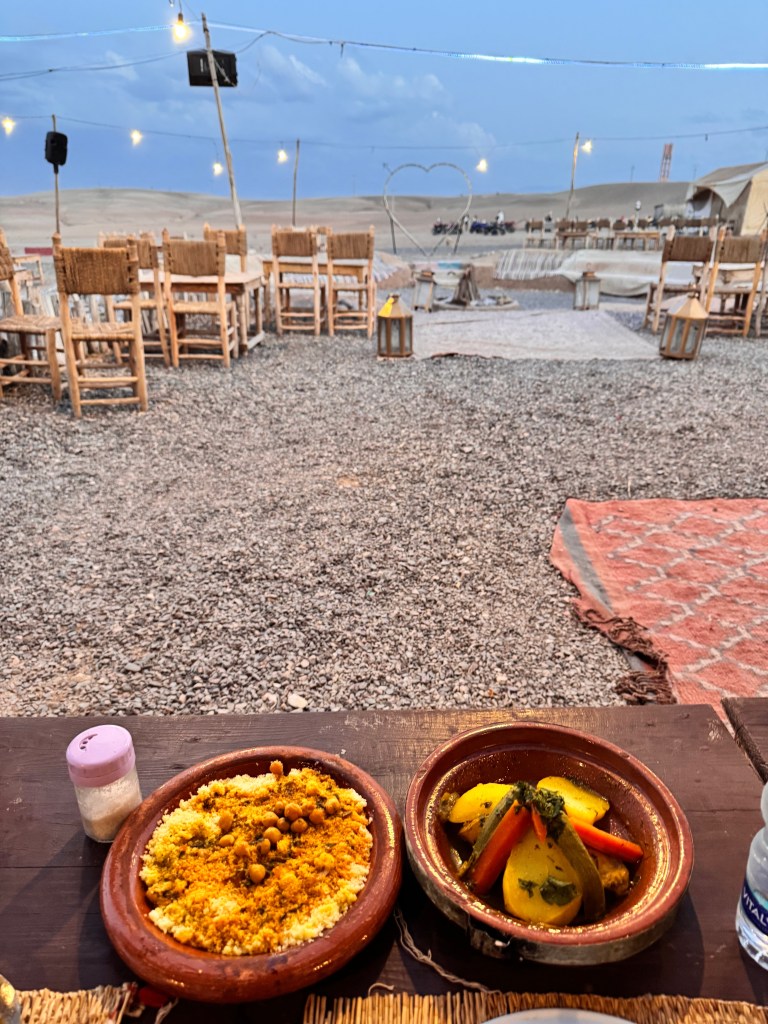
- Tagine, which is slow-cooked meat, fish or vegetables in a traditional pot like a stew topped with aromatic spices, fruit and veg
- Couscous (traditionally served on Fridays as it is a holy day and goes well with Tagine). Can be topped with meat or vegetables.
- Zaalouk, a smoky eggplant salad with roasted tomatoes. Typically, a starter or side dish.
- Moroccan pancakes/ mesmen
- Kebabs are famous
- Mint tea
- Brochettes
- Pastilla (pie)
- Harira soup (tomato-based Moroccan soup made of lentils, chickpeas etc.)
Top restaurants:
- La Trattoria – By candlelight around the pool, feel the night under a huge glass roof
- Limoni – Leaving behind the bustle of the street and discover a paradise of serenity in a patio of lemon trees
- La fontaine des épices – Feast amongst Moroccan lanterns on your rooftop of choice
- Restaurant Le Jardin Ben Youssef – a gorgeous garden for a casual lunch
- Dar Dar – a hidden gem of the Saadian era, only found by the discerning and curious visitors
Extra Ideas if you have time
- Free walking tour around the Medina: https://www.freetour.com/marrakech/exploring-marrakech-old-city-secrets?referralID=ZdvRXrkURXUfA7zT&campaign=Marrakechvideo
- Saadian tombs
- El badi palace
- Mellah Jewish Quarter which has a cool market
- Souks guide: https://wondrouspaths.com/guide-souks-marrakech-morocco-map
- Right next to the square is the Koutoubia mosque, which you can only enter if you’re Muslim
- Traditional Moroccan cooking class https://www.getyourguide.com/marrakech-l208/marrakech-traditional-moroccan-cooking-class-market-visit-t246357/?partner_id=57UJ5GF&utm_medium=online_publisher&placement=content-middle&cmp=Marrakech_video
- Trying a Hammam
Local tips:
- Dress modestly at religious sites and at the souks
- Carry toilet paper, as they charge you for it
- Haggle always, even when getting a taxi. Usually take away 25% or be prepared for how much you’ll want to give for an item. Some even recommend wearing shades at the market so the sellers don’t see where you are looking.
- Always expect nothing to be free. If you take someone’s picture, such as a snake charmer or vendor, they will probably ask for money. People will not give directions for free. If you look lost and someone pretends to be a nice tour guide, they will probably lead you somewhere and ask for money.
- Shared taxis are apparently the quickest way of transport
- Ignore people who pester you to buy something, even if they raise their voice
- Pickpockets are common, especially near the markets
- On Fridays, most restaurants will be closed or work less hours because it is a holy day
- There are calls to prayer a few times during the day. Be respectful and let them pass.
- Always carry cash because tips are common. Also, most places don’t accept cards.
- The currency is the Dirham MAD. Each dirham is divided into 100 santim. £1=12.27 dirham
- Buy a SIM card at the airport and change money there (remember that it’s a closed currency, so you can’t take Dirhams outside or inside the country)
- Drink bottled water and avoid ice cubes or brushing your teeth with water.
Emergency numbers for Morocco:
- 190 for police, 150 for ambulance
- Marrakech. AZNAG Assistance medicale et service d urgence MAROC: +212661 63 22 14. Service Privé D’Assistance Médicale Urgente: +212 5 24 43 30 30.
Key phrases:
- As-salaam Alaykum: (السلام عليكم) – “Peace be with you,” a common greeting.
- Salaam means hi
- Ma’a as-salamah or beslama: (مع السلامة) – “Goodbye,” a polite way to say farewell.
- Shukran: (شكراً) – “Thank you,” useful for expressing gratitude.
- Min Fadlak: (من فضلك) – “Please,” a polite addition to requests.
- Smahli/Afwan: (سمحلي/عفواً) – “Excuse me,” or “Sorry,” is helpful when asking for directions or making a request.


 My Goddess Complex
Leave a comment