Last week, we attended Moonmax and Raindance Film Festival’s AI Film Night at Century Club in Soho, London.
The evening began with a hands-on workshop with the AI filmmaking tool, Hailuo AI, a video generator which can convert text and images to high-quality videos. In theory, this is a way to transform anything in your imagination into reality and basically eradicate the barriers to entry for content creation.
The first talk was followed by an expert panel discussion with Elliot Grove, founder of Raindance Film Festival and British Independent Film Awards, Ruby Walden, Executive Producer of The Brutalist, and independent AI filmmaker Faisal Attrache. It was moderated by Tim Flagg, CEO of UKAI.
The panel focused on the democratisation of filmmaking, and how projects that never could have been put into production due to budget are now in the process of being created.
In terms of commercialisation, Walden, also a film financier, asked “how do you market an AI film with no celebrities?” This is also an issue for independent films and actors are now selling the rights to their likeness, so this issue seems easy enough to solve.
However, when the panel turned their focus on ethical questions, most of them remained not fully answered.
AI ethics
The importance of humans was underlined by everyone, and we were assured by Attrache that “the concept of a documentary does not work with AI and will always be protected”. But if you want to make “Transformers 100 with AI, do it; it sounds great.”
“Humans are 80% water and a good human will force your water out of the appropriate pores. God bless humans,” Raindance founder Elliot Grove commented to a rupture of laughter, leaving Attrache momentarily speechless.
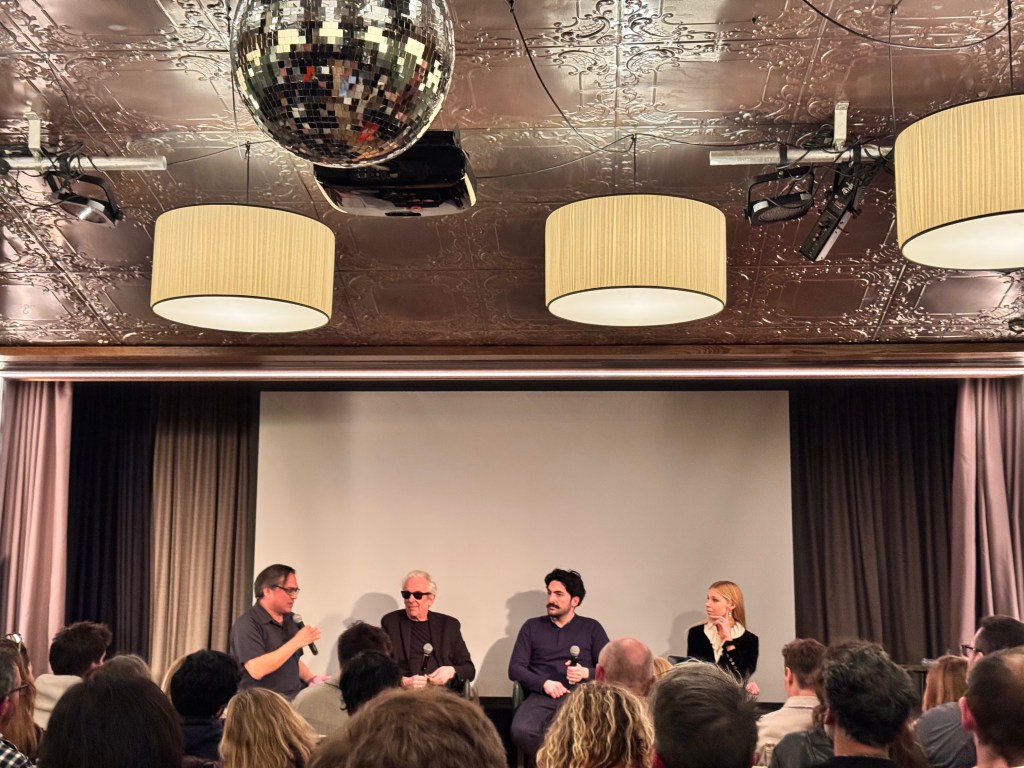
Grove later added, “I have enough faith in humanity to make the ethical decisions”, such as not using an actor’s likeness without consent.
Flagg predicted that “made by humans” will be a future value-add label similar to “organic”.
Truth is already becoming a commodity as the ability to recreate history is expanding (think of Trump’s AI video about Gaza). There is an increasing need to mandate AI labels on content, something which is already happening in China.
Walden added that “the news is also biased” and “not always truthful” and we need to start distinguishing between “freedom of speech” and “freedom of reac”. For example, Elon Musk is the most followed person on Twitter right now. When he bought it, this place was taken by Obama. Not only does this signal a conservative cultural shift amongst young people, but Musk is equipped with an unmatched authority to express incorrect cultural beliefs due to his influence. It’s becoming difficult to define the parameters of ethical thinking, and ‘soft skills’ will become a commodity amongst future generations who need to invest in their philosophical, ethical and decision making skills.
AI is making us dumber
A new study published in Societies suggests how our growing reliance on AI may erode critical thinking skills through cognitive offloading, especially for younger children who are exhibiting an even greater reliance on AI.
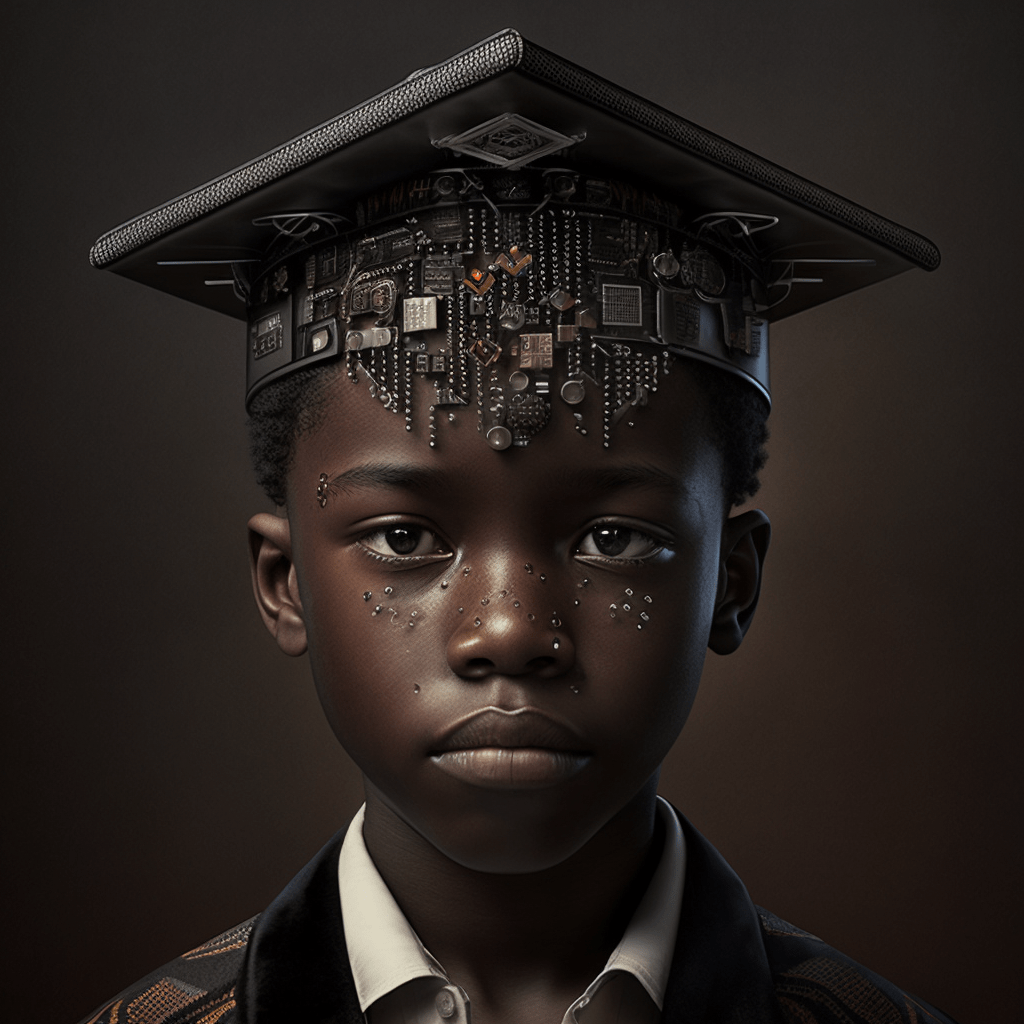
Grove also pointed this out: “We’re all being dumbed down. Kids are [already] 30% less intelligent than in 2010. Intelligence is defined as the ability to solve problems… I lived through the Nixon generation, there was anger and protests against the Vietnam War. With Trump now, people see what he’s doing and just say ‘did you read that?”
It’s clear that the human element of AI is essential as we need to edit and oversee its accuracy, but the fact that people are already losing the ability to write an email without the help of AI is frightening. Not only is our attention span getting collectively lower (to the point that reading novels is niche and two screen entertainment are regular), but AI can have long term effects on our creative and intellectual skills.
Democratising content & lowering the barrier to entry
Fast forward a week later to 26th March 2025 and CHAT GPT’s new image tool was released, changing the AI game completely. In seconds and virtually for free, it allows you to create any high-quality image by simply describing what you want. Users can create illustrations, hyperreal photographs, product shots featuring models and billboard advertisements. This tool can also edit or enhance existing images, adding text, adjusting elements, or applying new styles with remarkable precision.
This is every creator’s dream right?
Well it doesn’t really matter because it’s happening anyway. Steven Bartlett, Founder of Diary of a CEO and FlightStory, wrote on LinkedIn:
“Our response must be excitement. Change destroys old values, but for those who lean in, it creates incredible opportunities… The new ‘moats’ are attention, community and genuine connection – the things that AI can’t replicate.”
The conclusions at the AI Film Night were that AI was inevitable, so there’s no point in resisting it. Each panelist was asked what they’re most excited about with AI. Attrache said an AI game would be a visual concept we’ve never seen before, while Walden said she’s interested in seeing how it will change the way we value creativity.
Grove stated that AI will “democratise movies” because “we need storytellers”.
“We’ve always had pandemic,” he added. “Storytellers used pen and paper to tell people how to process things. You need to tell stories of what’s happening right now because it’s scary. You can be the prophets of today.”
Defining art & its connection to humans
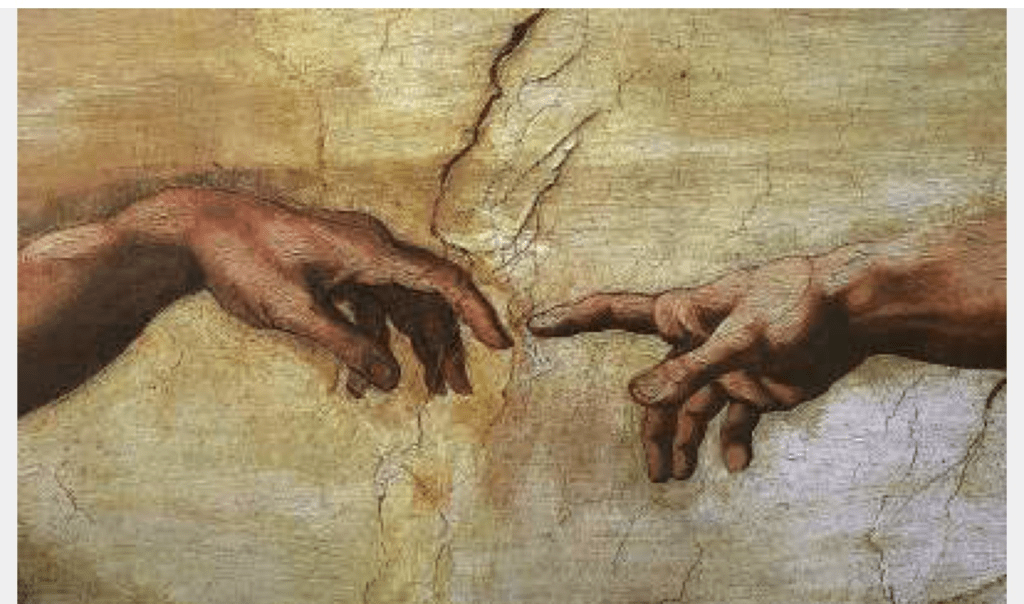
This new era of creativity might be exciting for brands and creators, despite its challenges.
However, ethical questions aside, AI is incompatible with art by definition. Art needs human connection, and it is more than just the literal ways that it’s expressed – whether through film, poetry, novels, painting or animation.
Art is defined as `’the expression or application of human creative skill and imagination, typically in a visual form such as painting or sculpture, producing works to be appreciated primarily for their beauty or emotional power`’.
This week, users harnessed the latest GPT-40 to emulate the work of Studio Ghibli, an animation studio which has created movies like Spirited Away and Howl’s Moving Castle.

These included a reworked trailer for The Lord of the Rings: The Fellowship of the Ring, scenes from The Sopranos, and Donald Trump and JD Vance’s heated real-life White House exchange with Ukrainian President Volodymyr Zelensky.
Simultaneously, a is a 2016 video of Studio Ghibli co-founder Hayao Miyazaki also went viral from those in the AI outrage camp. In this video, he describes AI-generated art as an “insult to life itself.” His animations are infamous for being painstakingly hand-drawn and made using a frame-by-frame method. One of his 4-second crowd scenes even took a year to create.
“I am utterly disgusted,” Miyazaki says in the video, responding to a clip generated from a monster image. “If you really want to make creepy stuff, you can go ahead and do it, but I would never wish to incorporate this technology into my work at all.”
This comes only weeks after almost 4,000 people signed an open letter calling on Christie’s auction house to cancel the first ever AI art sale due to claims that the generative digital pieces exploit human artists and are trained on copyrighted work.
Sam Altman, OpenAI’s CEO, wrote on X that after “a decade trying to help make superintelligence to cure cancer or whatever”, Studio Ghibli images were what made his work viral.
In his YouTube video on AI, D’angelo Wallace calls out the irony of an ‘AI artist’ complaining that his work is being “ripped off”.
One could argue that AI is simply a natural technological progression that can save animation time, but is art really only the end product?
Art is more than replication
Twin instagram artists @hanavbara, who create anime style cartoons inspired by pop culture, are amongst many creators who are protesting against AI. In a note posted to their account in the same week, they state that “AI generated images are NOT art.”
“This is not just about taking jobs from artists (which is already a huge deal), it’s also about devaluing art itself, turning it into a mass-produced, empty and soulless content,” they wrote.
“Art is more than just the final product. It’s about the process, struggles, and personal growth that comes with it… AI erases that, replacing it with instant and shallow replication. Real art brings people together, evoking emotions and reminding us what it means to be human.”
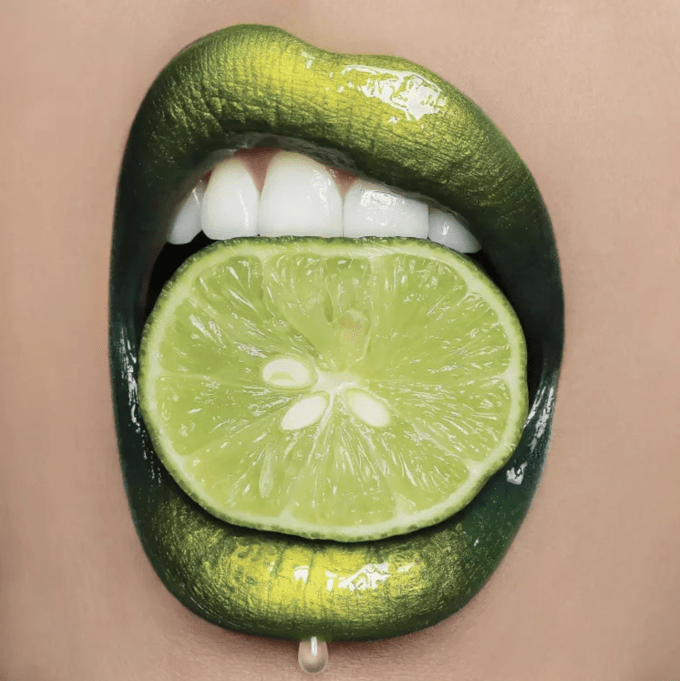
The most basic conception of art is replication. In her video essay “Why do movies look like Lime Lips now?“, YouTuber Lisa Fevral analyses the slow deprecation of cinema quality.
She equates this lacklustre cinematography to “Lime Lips”, a photo posted by makeup artist @vladmua, which has been used as a reference for beginners’ hyperrealism art tutorials and then became an exploitable meme in the 2020s.
This kind of hyperreal art is past modernism or contemporary work, and would have more value in the medieval world of arts compared to now, where the role of artists goes deeper than replicating photographs or real-life scenes to complete accuracy.
Artists must express ideas, emotions, and experiences through various mediums, aiming to provoke thought, inspire, and connect with audiences, while also contributing to cultural understanding and societal reflection.

Of course, this can be done using AI if you have the right image in your head, and it’s very cool that you don’t need years of training or natural skill to create images anymore. However, not only are you almost mindlessly replicating ideas, but the process of art is completely gone with AI.
Some could argue that AI art is peak post-modernism, where not only are there no original ideas, but we’re recycling every past idea a million times for pure replication.
AI in poetry
At the AI Film Night, Attrache argues that if a story made by AI delivers a moving message and makes you cry, why should this make a difference to you, as a consumer?
On the surface level, it doesn’t. You’ll still gain feelings and philosophical messages that have been based on past human work and experiences. However, remember how art by definition is supposed to be about more than yourself, and rather focused on connecting with real human experiences (not memories or echoes of them)?
British author Surekha Davies argues that we’re already at risk of ceding our humanity to AI if we start letting it write our poetry. She writes how one PhD graduate observed that it’s worth teaching robots to write poetry “so that people don’t half to”. Instead, we could watch movies and do nothing at all.
Davies emphasises the intrinsic human desire for creative expression and the potential loss of humanity if we delegate these tasks. Art enables personal growth and engaging in creative processes allows individuals to embark on transformative journeys, fostering growth and self-discovery. Neglecting the uniquely human aspects of creativity in favour of algorithms risks diminishing what it means to be human.
In defence of AI
In her 2023 article, Frankenstein: A Creation of Artificial Intelligence, Jennings Byrd draws parallels between Mary Shelley’s Frankenstein and AI creations, emphasising the ethical concerns and responsibilities of creators. Just as Victor Frankenstein lost control over his creation, AI developers risk similar consequences if artistic AI systems operate without oversight.
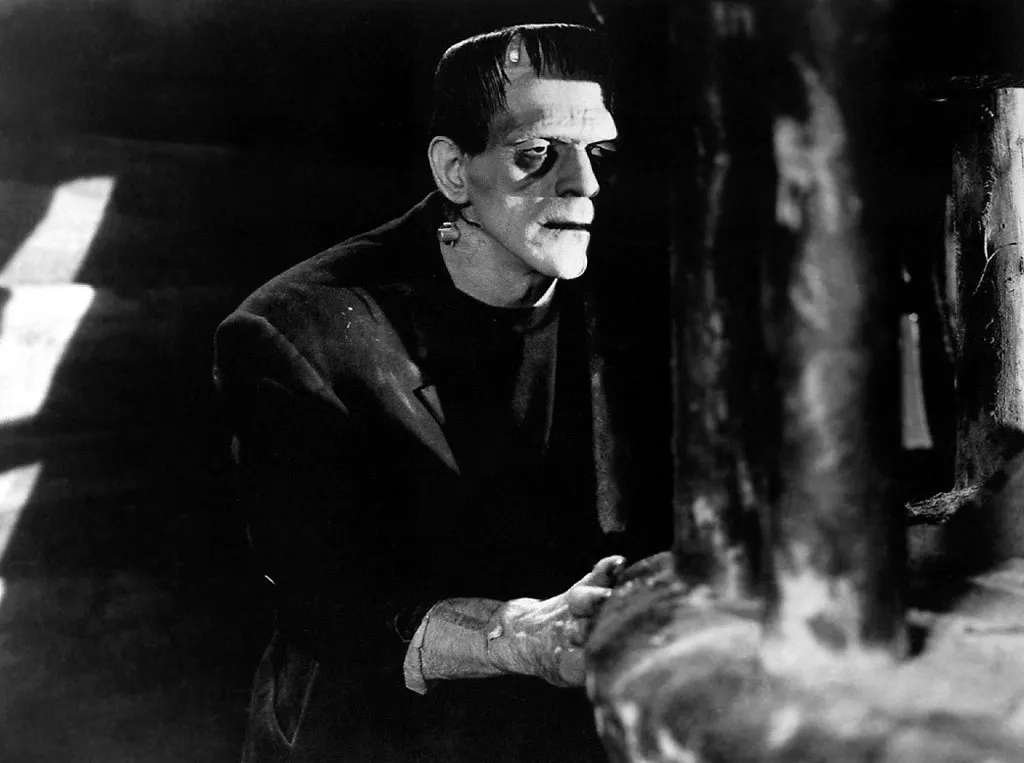
She begins with the foundational argument that Frankenstein’s
Monster represents the beginnings of AI and that Shelley demonstrates that AI benefits the world and is
only a necessary evil once man becomes irresponsible with
it.
She argues that Shelley was influenced by the Luddite movement, which is associated with the Industrial Revolution and the struggle of man to adapt and adopt new technologies aimed at improving productivity.
“The rise of new machines displaced some workers and led to economic strife for many others in the form of reduced
wages. However, those new technologies brought about
new jobs and, ultimately, increased the economic prosperity of nations around the world. This movement would have
undoubtedly infuenced Shelley to the point that she shows
us, as revealed below, how man and machine can coexist, if
man is willing to accept the benefts bestowed by machine.”
Therefore, there is potential for humans and AI to coexist, both within art and beyond. However, the lack of human understanding, empathy and responsibility towards our creation (AI) has a terrifying and destructive potential.
As it stands now, the mindless and algorithmic use of AI art is leading to solipsistic art, where only the shallow, surface-level message matters and human connection is sidelined.
However, humans are in complete control of the regulations and uses of AI art right now, so it’s up to us to use it to create cool ideas and harness its democratising potential, without sidelining the immense talent and hard work of real human artists.
What do artists do now?
Instead of creating AI and robotics to take over the things that we don’t want to do, like folding laundry, so that we can spend time being creative and making art, it’s rapidly competing for the very essence of our humanity. However, AI is still not perfect and humans are required to edit and control it, so we can harness it and use it responsibly.
The most obvious answer beyond this is that physical arts cannot be touched… yet. People still go to the theatre, opera, ballet etc.
However, this kind of entertainment is increasingly niche and, as the working classes spend more time on their phone, the upper classes are embracing the physical world.
Being offline is a social currency and indulging in physical intellectual practices, such as reading books and magazines, is becoming an indicator of both class and education.


Being offline is the new luxury – screens used to be for elite, and now avoiding them is a status symbol. In 2019, Nellie Bowles wrote for The New York Times, “humans are more expensive, and rich people are willing and able to pay for them… All of this has led to a curious new reality: Human contact is becoming a luxury good.”
AI definitely isn’t going anywhere, but we have both the individual and collective power to harness it responsibly for good, protecting digital artists, and choosing to support offline art while reducing our screen times.
In the meantime, take a break from your phone, touch some grass, follow human artists and book some theatre, concert, ballet or gallery tickets.


 My Goddess Complex
Leave a comment